
blog Archives - Best Online Hobby Classes | Hobby Classes Near Me | Younkeractivityhub
blog
[ August 19, 2026 by admin 0 Comments ]

Exams Required for International Nursing Jobs

For many nurses, working overseas is way more than just a career move; it’s a chance to build a future, gain international experience, and also provide a better quality of life for their families. Countries like the US, UK, Canada, and New Zealand continue to welcome qualified nurses from around the world. But before you begin your international nursing journey, you need to meet certain licensing and language requirements. One of the most important questions that aspiring nurses ask is: Which exams do I need to take? The answer depends on the country you want to work in. Each destination has its own licensing process, but most require proof of your nursing knowledge and an English proficiency test.

Why are these exams important?

Healthcare is one of the most regulated professions in the world. Every country wants to ensure that nurses meet the same professional standards before caring for patients. These exams help nursing councils evaluate whether you have the knowledge or the communication skills needed to work safely in the healthcare system.

Language proficiency tests

If English is not your first language, you will need to prove language skills before applying for registration. The International English Language Testing System is accepted by many nursing councils globally. It measures your ability in listening, reading, writing, and speaking. The Occupational English test is designed specifically for healthcare professions, including nurses. Instead of using general English scenarios,  it focuses on real healthcare situations, making it highly relevant for nursing practice.

Computer-based test for the UK

If you are planning to work in the United Kingdom, you must complete the test of competence process. The first stage is the computer-based test, which evaluates your theoretical nursing knowledge. It includes questions on professional practice, patient safety and clinical knowledge. Once you pass the test and complete other registration requirements, you will move on to the next stage.

Objective structured clinical examination

After arriving in the UK, internationally educated nurses typically complete the Objective Structured Clinical Examination. It differs from written exams in that it assesses practical clinical skills in simulated healthcare scenarios. You might be evaluated on patient communication and clinical processes.

How to Prepare for Nursing Exams

Preparing for international nursing exams takes dedication, but having a structured study plan makes a big difference.

Here are some practical tips:

  • Create a realistic study schedule.
  • Practice mock tests regularly.
  • Focus on your weaker subjects.
  • Improve your medical English.
  • Study official exam formats.
  • Join revision classes or coaching programs.
  • Stay consistent instead of cramming at the last minute.

So, working as a nurse abroad is an exciting opportunity that can transform both your professional and personal life. While exams require commitment and preparation, they are designed to ensure that you are ready to provide safe, high-quality patient care in the international healthcare system. Start your international nursing journey with Younkerr classes now. Experts here provide the support, practice and confidence you need to achieve your goals. With customised guidance and exam-focused coaching, you can prepare more effectively.

Also Read: How Does Phonics Help Children Learn to Read Faster?


blog
[ August 11, 2026 by admin 0 Comments ]

How Does Phonics Help Children Learn to Read Faster?

You know that moment when a kid is staring at a word, mouthing it out letter by letter, and then suddenly just… gets it? “Cuh-aa-t. Cat!” There’s this little flash of triumph on their face. That’s phonics doing exactly what it’s supposed to do.

A lot of parents figure reading comes down to memorization — show a child a word enough times and eventually it sticks. And sure, that works, up to a point. But it stops working the moment a kid meets a word they’ve never laid eyes on before. That’s the gap phonics fills. Instead of a stack of memorized flashcards, a child gets a system they can actually use.

Reading isn’t one single skill anyway. It’s really a handful of smaller ones, layered on top of each other:

  • Spotting the letters on the page
  • Matching them to the right sounds
  • Blending those sounds smoothly
  • Understanding what the word actually means

Phonics covers the first three. Skip it, and a kid is left guessing — from pictures, from context, from vague half-memory — and that guessing gets messier every year as the words get longer and less predictable. Nowadays, online phonics classes have proved to help kids learn better without having to step out.

Why Phonics-Trained Kids Read Faster

Here’s the part that actually matters day to day: a child who’s learned phonics doesn’t need every single word taught to them one at a time. They can sound out something brand new right there on the page. That’s a real head start over kids who are leaning purely on sight words they’ve memorized.

A few things in online phonics classes stack up in their favor:

  • English has tens of thousands of words — no flashcard deck is covering all of that
  • There are only about 44 sounds in the language, and once a kid learns those, they hold a kind of master key to most of what’s left
  • They stop needing someone to rescue them mid-sentence when a tricky word shows up
  • That independence tends to be the real difference between a kid who’s “still learning to read” and one who’s already reading

It Fixes Spelling Too, Almost as a Side Effect

Once a kid understands how sounds map onto letters, they start using that logic in reverse when they’re writing.

  • A child who knows “sh” makes a particular sound isn’t going to spell “ship” as “sip”
  • That kind of sound-based logic saves a lot of frustration once spelling tests start showing up in elementary school
  • It also means less reliance on rote-memorised word lists that fall apart the moment a new word appears

Why It Takes Actual Practice

Spoken language, kids just absorb — being around it is basically enough. Phonics doesn’t work that way. It needs repetition, structure, someone walking a child through it consistently.

What tends to make the biggest difference if your kid goes for online phonics classes:

  • Sessions that stay short enough to hold a young kid’s attention
  • A schedule that actually fits around a busy family week
  • An instructor who slows down or speeds up depending on how the child is doing, not a fixed pace for everyone
  • Patience — some kids move through the stages in a couple of months, others need longer, and neither is a red flag

Why the Payoff Sticks Around

A kid reading fluently by second or third grade isn’t just doing better in English. That skill shows up everywhere — science textbooks, math word problems, social studies chapters. Reading stops being a chore they’re dragging themselves through and turns into something they just use, without thinking about it much.

There’s a quieter side to this, too. Kids who struggle to sound words out tend to start avoiding reading altogether, and that avoidance compounds — the less they read, the further behind they fall, the more they avoid it. Early, solid phonics instruction is usually what stops that cycle before it really starts.

If you’re looking for guided support, Younkerr Phonics Classes runs structured online phonics classes built to help kids build real reading and spelling skills at a pace that actually fits them — steady, sound-by-sound progress that turns a hesitant reader into a confident one.

Also Read : Top International Exams Every Student Should Know About

blog
[ August 6, 2026 by admin 0 Comments ]

Independence Day 2026: India to Celebrate 80 Years of Freedom; Theme, History & Events

Independence Day 2026 marks a historic milestone as India celebrates 80 years of independence on Saturday, 15 August 2026. The occasion commemorates India’s freedom from British rule in 1947 while honoring the sacrifices of millions of freedom fighters who laid the foundation of the world’s largest democracy.

This year’s celebration is especially significant as it not only reflects on the nation’s achievements over the past eight decades but also looks ahead to India’s ambitious vision of becoming a Viksit Bharat (Developed India) by 2047, when the country will complete 100 years of independence.

Across the nation, schools, colleges, government institutions, private organizations, and communities will celebrate with flag-hoisting ceremonies, patriotic cultural programs, parades, and campaigns that inspire citizens to contribute to India’s future.

Independence Day 2026 Date

  • Date: Saturday, 15 August 2026
  • Occasion: 80th Independence Day of India
  • Day: Saturday
  • Significance: Celebrating 80 years of India’s independence from British rule.

Independence Day 2026 Theme

As India celebrates its 80th Independence Day, the Government of India has not announced a single official core theme for the national celebrations. However, this year’s nationwide campaigns and events strongly focus on the country’s long-term vision of Viksit Bharat 2047 (Developed India).

The guiding slogan for Independence Day 2026 is:

“Honoring Freedom, Inspiring the Future.”

This slogan reflects India’s commitment to remembering the sacrifices of its freedom fighters while motivating every citizen—especially the younger generation—to actively participate in building a stronger, self-reliant, innovative, and globally competitive nation.

The celebrations highlight the roadmap toward Viksit Bharat @2047, emphasizing:

  • Honoring India’s freedom fighters
  • Inspiring youth participation
  • Innovation and technology
  • Sustainable development
  • Self-reliance (Atmanirbhar Bharat)
  • Inclusive economic growth
  • National unity and citizen participation

The 80th Independence Day is not only a celebration of India’s glorious past but also a vision for the nation’s future.

History of India’s Independence

India gained independence on 15 August 1947, ending nearly 200 years of British colonial rule. The freedom movement was one of the greatest struggles in world history, driven by countless leaders and ordinary citizens who dedicated their lives to achieving independence.

Some of the most influential freedom fighters include:

  • Mahatma Gandhi
  • Subhas Chandra Bose
  • Bhagat Singh
  • Sardar Vallabhbhai Patel
  • Jawaharlal Nehru
  • Chandrashekhar Azad
  • Rani Lakshmibai

At the stroke of midnight on 14–15 August 1947, Jawaharlal Nehru delivered his historic “Tryst with Destiny” speech, marking India’s emergence as an independent nation.

Since then, every Independence Day has served as a reminder of the courage, sacrifice, and determination that made freedom possible.

Why Independence Day Is Important

Independence Day is much more than a national holiday. It is a day to:

  • Honour the sacrifices of freedom fighters.
  • Celebrate India’s democratic values.
  • Promote national unity and integrity.
  • Reflect on the country’s achievements.
  • Inspire future generations.
  • Encourage citizens to contribute to nation-building.

For the 80th Independence Day, the celebration carries additional significance as India prepares for the journey toward becoming a developed nation by 2047.

Significance of 80 Years of Freedom

The 80th Independence Day is one of the biggest milestones in India’s modern history.

Over the last eight decades, India has emerged as a global leader in numerous sectors, including:

  • Space exploration
  • Information Technology
  • Digital Payments
  • Artificial Intelligence
  • Healthcare
  • Renewable Energy
  • Infrastructure Development
  • Agriculture
  • Manufacturing
  • Start-up Ecosystem
  • Education and Research

The celebration is both a tribute to India’s remarkable progress and a reminder that every citizen has a role in shaping the nation’s future.

How India Celebrates Independence Day


1. Flag Hoisting Ceremony

The Prime Minister hoists the National Flag at the Red Fort in New Delhi, followed by the National Anthem and an address to the nation.

2. Cultural Programs

Educational institutions organize:

  • Patriotic songs
  • Dance performances
  • Drama and skits
  • Speech competitions
  • Essay writing contests
  • Painting competitions
  • Quiz competitions
3. Patriotic Decorations

Government buildings, homes, schools, offices, and marketplaces are decorated with the Indian tricolor.

4. Kite Flying

Many cities celebrate Independence Day with colorful kite-flying events, symbolizing freedom and hope.

5. Digital Celebrations

Citizens participate through social media campaigns, online tributes, patriotic videos, and awareness initiatives supporting the vision of Viksit Bharat 2047.

Major Events Expected During Independence Day 2026

As India marks 80 years of independence, several activities are expected nationwide:

  • National Flag Hoisting Ceremony at the Red Fort
  • Prime Minister’s Independence Day Address
  • Patriotic cultural festivals
  • NCC and school parades
  • Tributes to freedom fighters
  • Government awareness campaigns
  • “Har Ghar Tiranga” participation drives
  • Youth engagement programs
  • Community service initiatives
  • Digital campaigns promoting Viksit Bharat 2047

free demo class

                                                Few Seats Left: Click Here


Independence Day 2026 Celebrations and Viksit Bharat 2047

The vision of Viksit Bharat 2047 is expected to remain at the heart of this year’s celebrations.

The initiative aims to transform India into a developed nation by the centenary of independence through:

  • Economic growth
  • Digital transformation
  • Quality education
  • World-class infrastructure
  • Clean energy
  • Technological innovation
  • Employment generation
  • Women’s empowerment
  • Environmental sustainability
  • Good governance

The slogan “Honoring Freedom, Inspiring the Future” reflects this national commitment by encouraging every Indian to participate in shaping the country’s future.


Frequently Asked Questions (FAQs)

1. When is Independence Day 2026?

India will celebrate Independence Day on Saturday, 15 August 2026.

2. Which Independence Day is celebrated in 2026?

India will celebrate its 80th Independence Day in 2026.

3. What is the theme of Independence Day 2026?

While the Government of India has not announced a single official core theme, the nationwide celebrations are centered around the vision of Viksit Bharat 2047 (Developed India) under the guiding slogan “Honoring Freedom, Inspiring the Future.”

4. Why is Independence Day celebrated?

It commemorates India’s independence from British rule on 15 August 1947 and honors the sacrifices of countless freedom fighters.

5. Where is the main Independence Day celebration held?

The principal national celebration takes place at the Red Fort in New Delhi, where the Prime Minister hoists the National Flag and addresses the nation.

6. What is Viksit Bharat 2047?

Viksit Bharat 2047 is the Government of India’s long-term vision to transform India into a fully developed nation by the year 2047, marking 100 years of independence.


blog
[ July 17, 2026 by admin 0 Comments ]

Top International Exams Every Student Should Know About

It’s vital for students to wisely select exams and study carefully. Students realise that a well-informed decision can lead to picking the right admission paths through the top international exams available. However, various exams are accepted at various universities for both academic and language qualifications. Ahead of the exams, students have alternative opportunities to gain admission to colleges and earn scholarships by knowing about the top international exams. Reading and understanding the most popular exams abroad also supports preparation strategies before applying to foreign universities.

1. IELTS

One of the most popular and top international exams in use currently to determine your skill level for the English Language, the IELTS exam is the right choice for all students wishing to study in some of the leading countries around the globe. The skills that are being measured in the test are reading, writing, speaking, and listening. A rigorous preparation makes for overall better performance and the chances of admission.

2. TOEFL

TOEFL is an examination that assesses the language ability of the academic English required by students from abroad. The foreign universities, as part of their undergraduate and postgraduate admission procedure, recognise the TOEFL test. TOEFL comprises the following four parts, which assess your level of the English language: Reading, Listening, Speaking, and Writing. Good grades give you the potential for university applications worldwide.

3. SAT

SAT is still a significant admission test for colleges around the world. Numerous colleges in the United States give points for college entrance exams along with academic achievement. It is one of the top international exams that assesses mathematical, literary, and written skills. High scores have a great impact on admission possibilities and scholarship opportunities.

4. GRE

GRE is needed by students wanting admission to postgraduate courses in various fields of study around the world. Analytical, quantitative, and Verbal reasoning skills are evaluated by universities. A high GRE score enhances a graduate school application and expands its opportunities nationwide and abroad.

5. GMAT

GMAT actively assists students in the management/business fields who are studying in other countries. All analytical, mathematical, verbal, and reasoning skills are studied, and their mental faculties are assessed in business schools. High GMAT scores can help improve applications’ prospects of getting accepted in top management programs around the globe, including MBA and Master’s in Business Administration.

6. PTE Academic

PTE Academic is now one of the top international exams accepted all over the world. It is an effective examination of the practical usage of English using the computer. PTE has become more and more acceptable with universities, due to its swift results, its fair assessment, and its popularity among students.

7. ACT

Another accepted college entrance exam for international students is the ACT. It assesses both extensive: Maths, Science, reasoning, English, and Reading. In fact, ACT scores are taken into account along with SAT scores for admission evaluations and for determining scholarship at many universities.

Select the appropriate exam to enter the right university!

Choosing one of the top international exams is dependent on the destination, university, and academic objectives. Research helps to make the examination plan and program easy to prepare. Pupils’ confidence and their performance in examinations are enhanced positively and regularly when they are well prepared. International exams represent the top exams, and having a clear understanding of what they’re about helps place students in successful admissions and rewarding international education experiences.

Also Read : 10 Benefits of Learning Mental Math for Students


blog
[ July 9, 2026 by admin 0 Comments ]

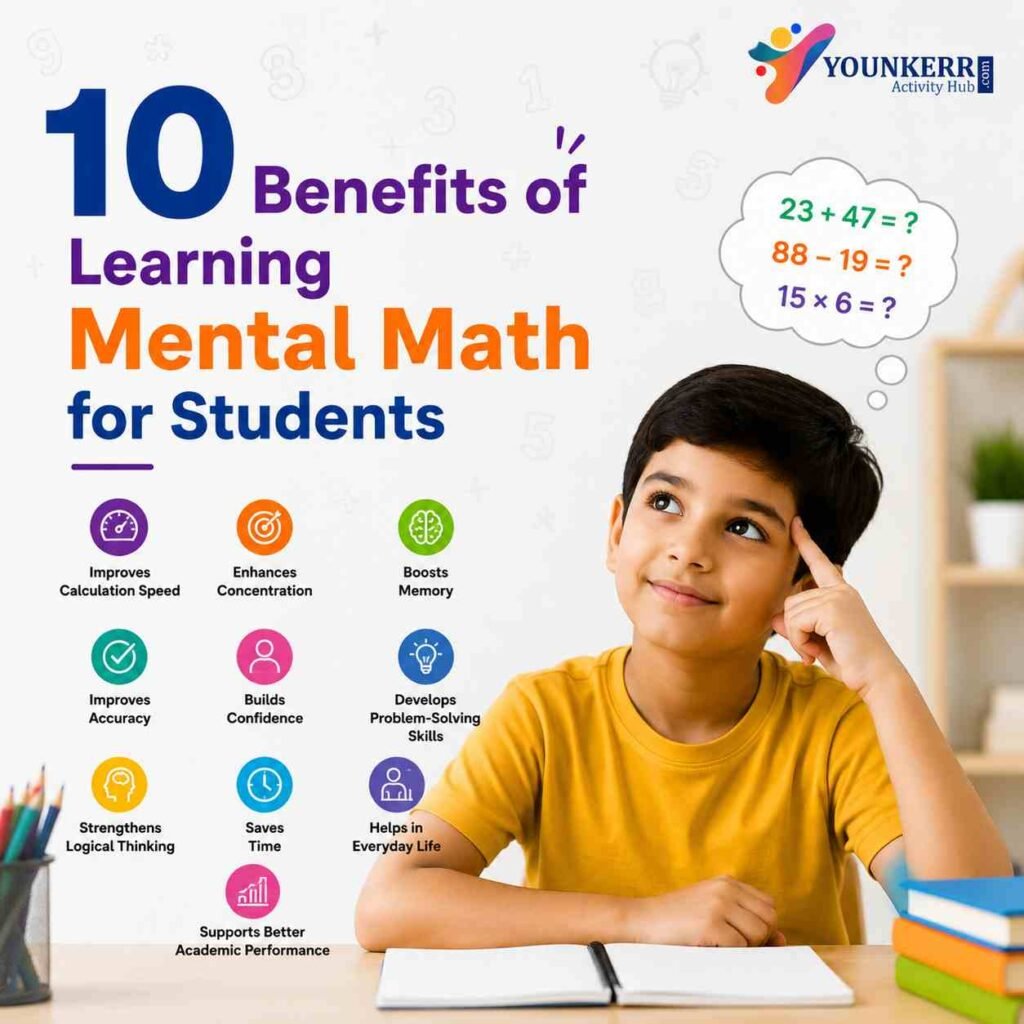
10 Benefits of Learning Mental Math for Students

Math is not just about solving problems on paper or using a calculator. In everyday life, you might need to do quick calculations in your head, whether you are shopping, managing time, or just checking your bill. That’s exactly where mental math is such an important life skill that comes in the picture. Mental math is the ability to solve mathematical problems without using a calculator or any other method, so the good news is that mental math is not about memorizing difficult formulas; it’s all about learning simple techniques.

Improves number sense

One of the biggest benefits of mental health is that it helps you understand numbers better. Instead of simply memorizing answers, you can begin to recognise patterns and even estimate results.

Builds faster calculation skills

Mental math helps you solve problems much more quickly. Simple calculations like addition or subtraction become easier with regular practice. Whether you are answering questions in a class or even completing an exam, faster calculations save valuable time.

Increase confidence in math

You might feel nervous when it comes to mathematics. Mental math helps change that. As you become more comfortable solving problems without relying on calculators to gain confidence in your abilities.

Strengthens problem-solving skills

Mental math encourages you to think instead of simply following steps. Rather than just using one fixed method, you learn different ways to solve the problem. Flexible thinking improves the overall problem-solving ability.

Improves memory and concentration

Solving math problems mentally requires you to remember numbers and perform calculations. This regular mental practice strengthens memory and improves concentration.

Reduces dependence on calculators

Calculators are really useful tools, but you should not rely on them for every calculation. Mental math teaches you to trust your own thinking and solve simple problems independently.

Makes everyday life easier

Mental math is useful far beyond the classroom. You can use it in many everyday activities like calculating discounts, splitting a restaurant bill, measuring ingredients while cooking, or managing pocket money. These practical skills help you become more independent and confident in your daily life.

Prepare students for a competitive exam

Many entrance exams and competitive tests include sections where speed and accuracy are very important. When you are comfortable with mental calculations, you often complete math questions more effectively, giving yourself extra time for difficult problems.

Encourages logical thinking

Mental math is not just about finding the right answer. It teaches you to analyse problems and identify strategies. These logical thinking skills support learning in subjects like science, coding, and engineering.

Makes learning math even more enjoyable

When you can solve problems quickly, math becomes less frustrating and more rewarding. Mental math often includes fun activities and game challenges besides puzzles that keep you engaged. Instead of seeing maths as difficult, you begin to enjoy the challenge of finding faster and smarter solutions.

So, in short, you can say that learning mental math is way more than just answering questions quickly. It helps you build confidence and improve concentration.

 Also Read : 7 Reasons why Coding is Important for Young Minds


blog
[ June 20, 2026 by admin 0 Comments ]

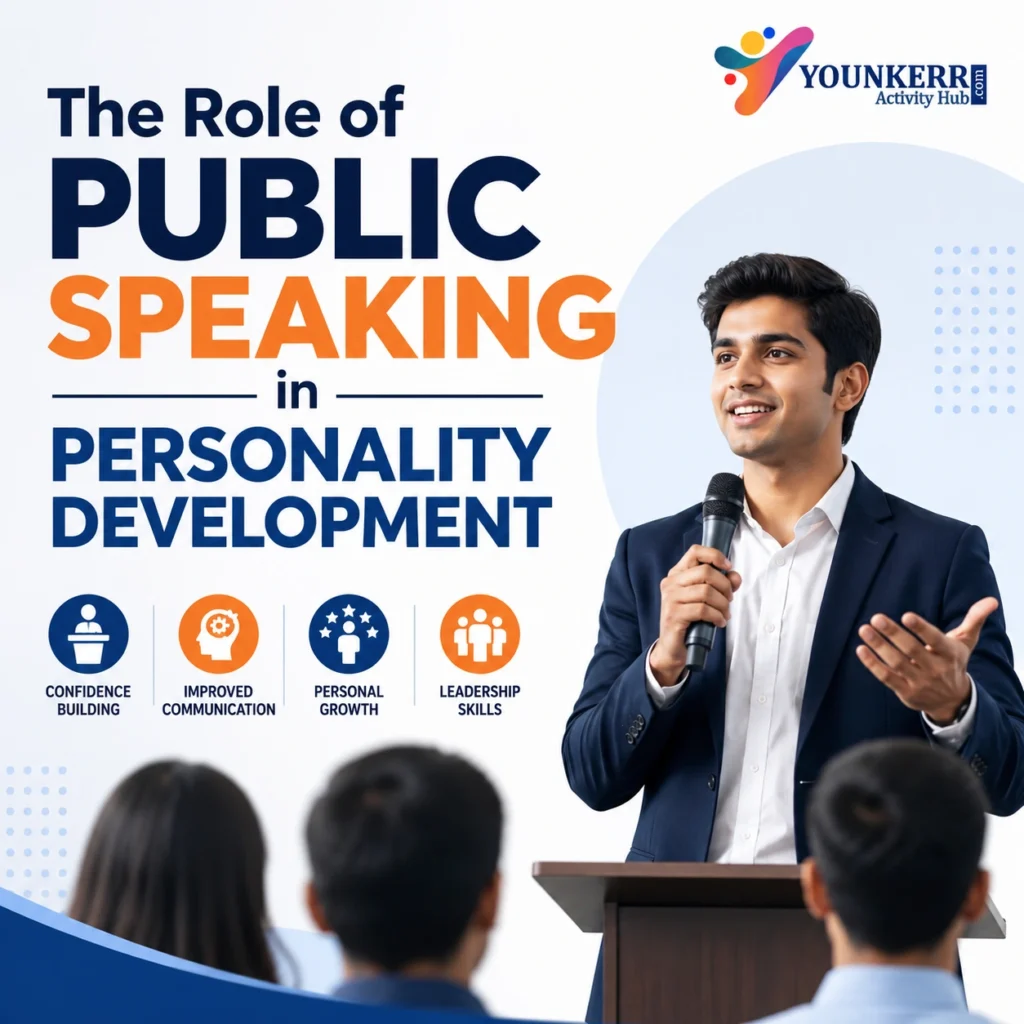
The Role of Public Speaking in Personality Development

Good communication is always a statement. The role of public speaking is a statement of the same. Speaking skills are not only about giving speeches but also about developing confidence and clear thoughts, and building an attitude. Standing on a stage and trying to speak will make you confident in thinking and projecting your thoughts. This is indeed very useful for your personal, academic, and professional lives, and boosts your self-esteem and reduces fears to make your personality holistic.

Builds Confidence and Self-Esteem

It is impossible to overlook the role of public speaking, starting from the boost that it gives to our self-confidence. An audience will make your fear feel small as you speak, thus you can have belief in yourself while attempting to make an impression of confidence on an audience.

Key benefits:

  •     Reduces stage fright
  •     Improves self-belief
  •     Better body language
  •     Develops a positive mindset

 Improves Communication Skills

Nowadays, clear communication is indispensable to mankind. The role of public speaking lies in teaching vocal tone variation, correct pronunciation, and a clearer delivery of speech, also not to forget, effective listening, and quick thinking ability.

  Key benefits:

  •     Enhanced verbal presentation
  •     Stronger listening skills
  •     Clear idea presentation
  •     Enhanced vocabulary skills

 Develops Leadership Qualities

It is only with a leader’s ability to effectively deliver a speech and their ability to articulate their plans to an audience that you have hope in their ideas. Public speaking skills are used to develop qualities like making tough decisions and influencing other people toward a common goal. With your audience’s trust, a confident speaker uses authority to pass across views with a clear and understandable tone.

  Key benefits:

  •     Inspires people to work
  •     Develops the ability to make tough decisions
  •     Enhances teamwork
  •     Better problem-solving ability

Enhances Critical Thinking

One can analyze any form of feedback that he or she receives and present a logical point in the presence of an audience, while simultaneously being capable of answering the many questions asked. This, in turn, enhances critical thinking that can help you solve anything that life puts in your way.

  Key benefits:

  •     Stronger analysis
  •     Speedy decisions
  •     Logical reasoning
  •     Creative development

Strengthens Social and Professional Presence

Your impressiveness will always stand out from everyone else, and in any place you are. It matters while attending an interview or even when you’re at a social gathering. The role of public speaking can be very helpful for establishing strong relationships and also building a stronger career, as a strong communication skill enables you to relate to the masses and people from different sectors.

  Key benefits:

  •     Effective networking skills
  •     Improved interview delivery
  •     Better personal branding
  •     Develops career opportunities

 Speak with Confidence, Grow with Purpose

 Public speaking plays a major role in your personality development, and the role of public speaking includes building confidence, boosting communication, becoming a leader, and making your thoughts analytical. Through constant practice and regular work, you can turn your fear into a powerful asset to achieve success and flourish in your life. Develop strong speaking skills and build a powerful personality so that you can have a dream life.

Book Your Demo Class Today


blog
[ June 9, 2026 by admin 0 Comments ]

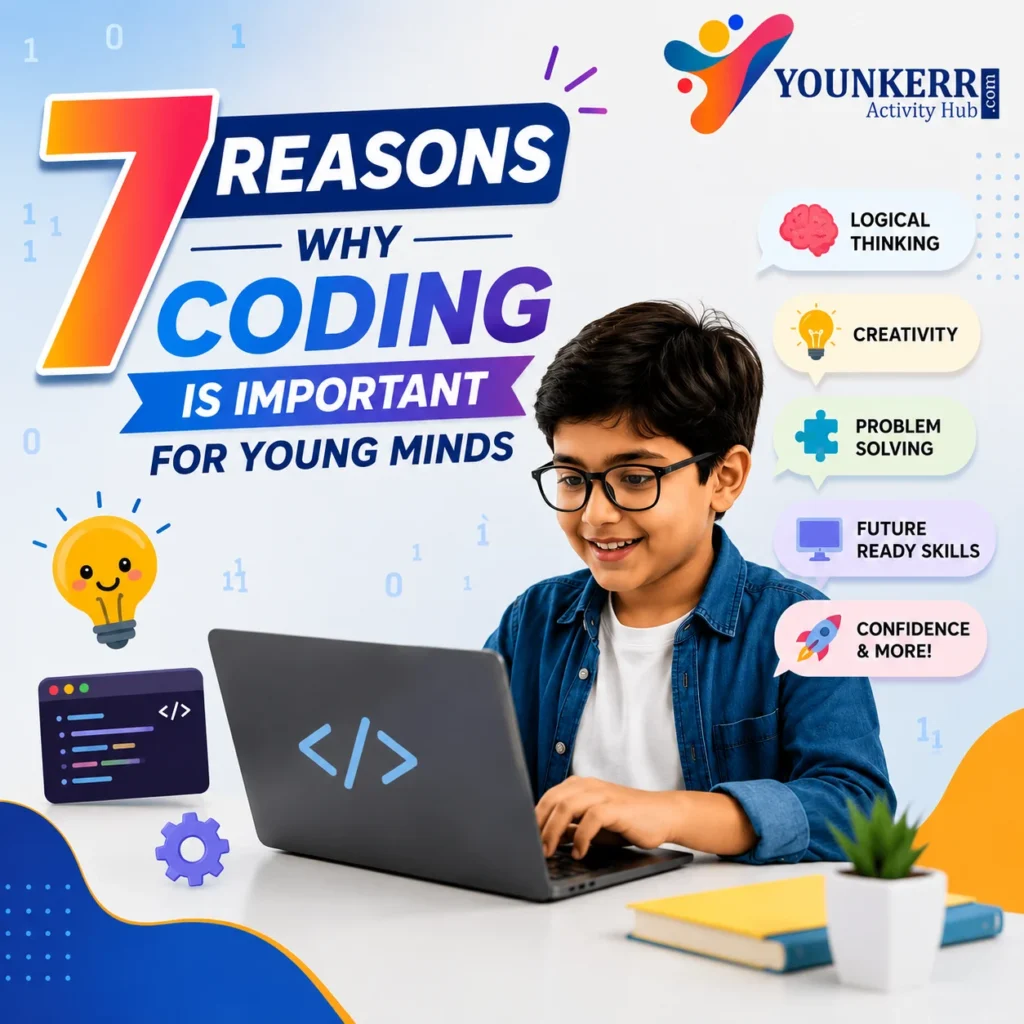
7 Reasons why Coding is Important for Young Minds

Technology is a part of everyday life. From smartphones and tablets to video games and smart devices, your kids are growing up in a digital world. No doubt many kids know how to use technology, but learning how technology works is a different skill entirely. This is exactly where coding comes in the picture. Coding is no longer just for software engineers and technology professionals. Today it is considered one of the most valuable skills that your kids can learn. Coding teaches your kids how to think and solve problems. More importantly, it helps prepare them for a future where technology will play a very important role in education.

What is Coding?

Coding is a process of giving instructions to computers so it can perform specific tasks. These instructions are written using programming languages that computers can understand. For kids coding often begins through interactive games and visual interactive programs.

Why is coding important for young minds?

Coding is much more than just computers. It teaches valuable life skills that can benefit your kids both inside and outside the classroom.

Coding develops problem-solving skills

One of the best benefits of learning to code is the development of problem-solving skills. Every coding project represents some challenges that encourage your kids to think and find solutions independently.

When children write code, they learn how to:

  • Break down complex tasks
  • Analyze situations
  • Identify solutions
  • Test ideas
  • Fix mistakes

Coding encourages creativity

You might think that coding is just about numbers and technical skills but it is highly creative. Instead of simply using technology your kids can become creators who bring their ideas to life.

Coding allows children to create:

  • Games
  • Websites
  • Animations
  • Mobile apps
  • Interactive stories
  • Digital artwork

Instead of simply using technology, kids become creators who bring their ideas to life.

Coding improves logical thinking

Coding requires your kids to think logically and follow a sequence steps. They learn to organize information and also follow processes. As your kids practice coding they develop structured thinking habits that can support learning in subjects like mathematics.

Coding teaches persistence and resilience

Every programmer encounters challenges and errors. Your kids quickly learn that mistakes are a normal part of the coding process. When the code doesn’t work as expected they must identify the problem and also make adjustments. This process teaches perseverance and resilience.

Coding prepares child for future career

Technologies transforming nearly every industry. Many future careers will require at least a basic understanding of digital tools and technology. Learning coding at a very young age can provide a strong foundation for your Kids future

Industries that increasingly value coding skills include:

  • Software development
  • Artificial intelligence
  • Robotics
  • Healthcare
  • Engineering
  • Finance
  • Digital marketing
  • Game development

Coding strengthens academic performance

Coding supports learning in several academic subjects. Coding helps your kids understand patterns and logic in mathematics. It also introduces them to scientific thinking and experimentation.

Coding builds confidence and independence

There is a special sense of accomplishment that comes from creating something from scratch. When your kids successfully build a game animation or project, they see the results of their hard work immediately. This experience helps them believe in their abilities also develop independence

Skills Children Learn Through Coding

Beyond technical knowledge, coding helps children develop a wide range of transferable skills.

These include:

  • Critical thinking
  • Creativity
  • Communication
  • Collaboration
  • Problem-solving
  • Logical reasoning
  • Patience
  • Adaptability
  • Innovation

These skills are valuable in school, future careers, and everyday life.

So you must know that coding is way more than just a technical skill; it’s a powerful tool for developing creativity and critical thinking. By learning to code, your kids can gain valuable skills that can benefit them academically and personally. If you are looking to help your kids explore the exciting world of technology, Younker coding classes provide engaging programs that make coding fun and interactive.

Book a Free Coding Demo Class

blogchess
[ May 20, 2026 by admin 0 Comments ]

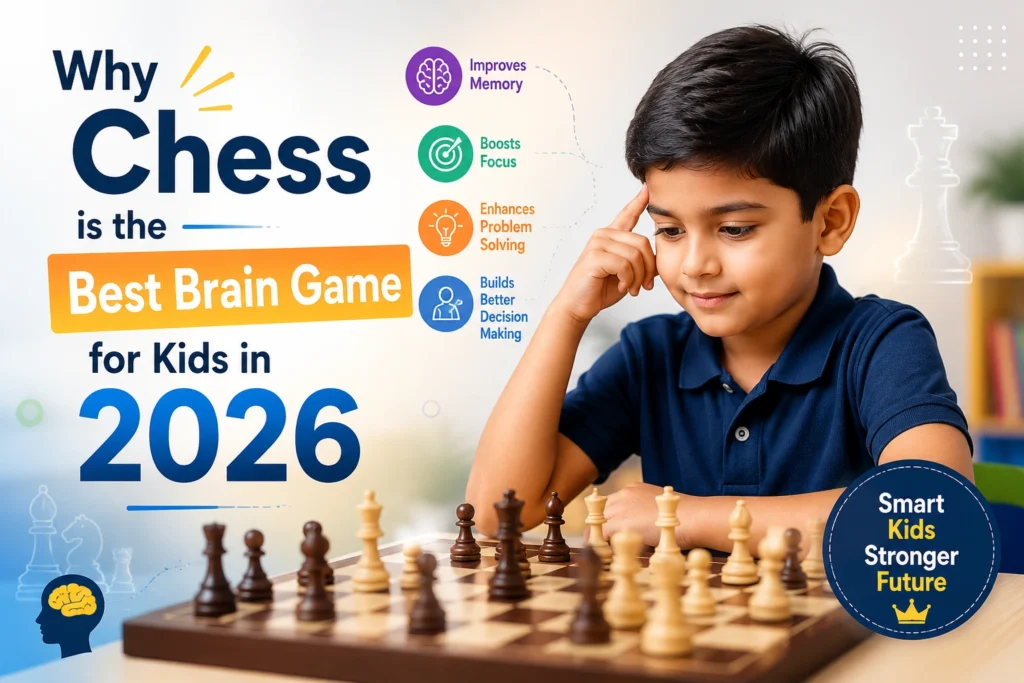
Why Chess is the Best Brain Game for Kids in 2026

In today’s digital world, your kids spend a lot of time on mobile phones, tablets, and video games. No doubt technology has many benefits, but parents are also looking for activities that help kids think better, improve focus, and learn important life skills. This is one of the major reasons why chess is becoming so prominent among kids in 2026. Chess is not just a board game anymore; it is also seen as one of the best brain games for children because it helps improve memory, concentration, and problem-solving skills. The best part is that the game is both educational and fun. Children enjoy the challenge while also developing skills that can help them in academics.

What makes chess a brain game?

Chess is called a brain game because it requires thinking, planning, and decision-making. Every move matters, and players must carefully analyze the board before making a decision. Unlike many games that rely mostly on luck, this one is based solely on strategy and intelligence. Your kids learn how to think ahead, solve problems, and understand consequences. During a chess game, your kids also use different parts of the brain at the same time. They remember moves and calculate possibilities. This mental activity helps strengthen brain development.

Enroll in our Chess Demo Classes: Contact Us

Chess improves concentration and focus

One of the biggest challenges that you might face as a parent today is helping children focus. Social media, online videos, and fast-moving digital content often reduce attention spans. Chess teaches you to sit efficiently and focus on one activity for a long time. A single game might last several minutes or even hours, depending on the level of play.

Kids learn to:

  • Pay attention to details
  • Stay calm under pressure
  • Think carefully before acting
  • Avoid distractions

Chess builds problem-solving skills

Every chess game is filled with challenges. Your kids constantly face situations where they must find the best solution. For example, how to protect their king or how to escape danger. By solving these small problems, children slowly develop stronger analytical thinking skills. This habit of problem-solving can also help them in mathematics and science.

Online Chess Has Made Learning Easier in 2026

One major reason for chess becoming more popular among kids in 2026 is the growth of online learning platforms.

Children can now:

  • Learn chess from home
  • Play with kids from different countries
  • Watch tutorials and lessons
  • Practice puzzles and challenges
  • Join online tournaments

So, above all, you need to know that in 2026, chess continues to grow as one of the biggest brain games for kids because it offers much more than entertainment. It helps your kids develop concentration, memory, and creativity in a fun and engaging way. Chess teaches valuable life lessons about disciplined decision-making and also learning from mistakes. It also supports academic growth and helps you use technology more positively. Whether played at home or in school, chess is a powerful activity that helps kids grow mentally and emotionally.

Also Read :Future Careers in AI and What Kids Need to Learn Today


blog
[ May 11, 2026 by admin 0 Comments ]

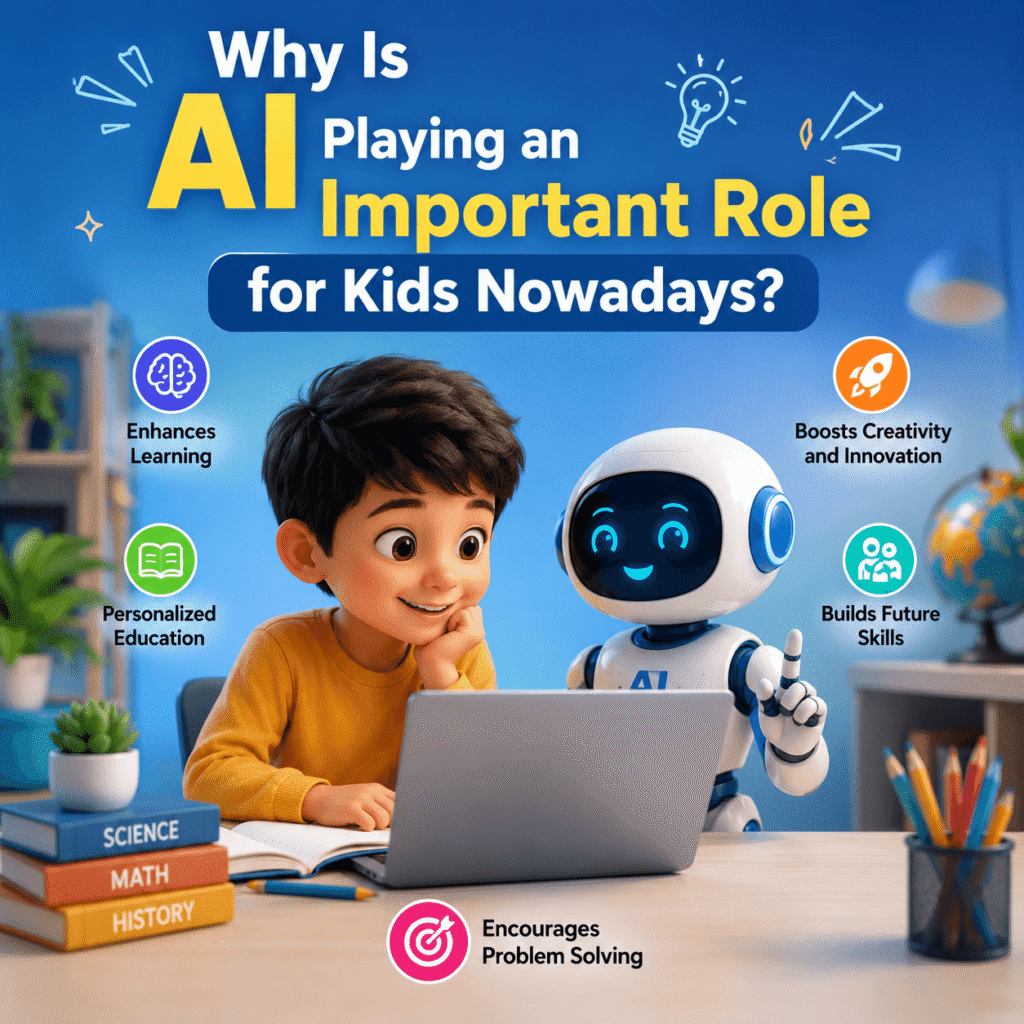
Why Is AI Playing an Important Role for Kids Nowadays?

AI is already seamlessly incorporated into the education and lives of children. Children in today’s era are users of Artificial Intelligence (AI) learning, play, and communication tools such as smart technology devices, learning apps, and social media. The use of smart devices, education applications, and social media by children is an artificial Intelligence (AI) learning, playing, and communicating tool. These technologies allow students to learn in a more engaging, interactive, and student-centric approach in response to their needs. AI also helps children to think logically and solve problems, to be creative. AI contributes in various ways to Virtual Assistant skill development through language learning. With digital technology continuing to evolve at a rapid pace, AI is assisting children in getting ready for their future in a smarter and more technologically advanced world.

How AI Is Benefiting Kids in Modern Times

AI enables children to learn, be creative, communicate, and be skilled. Smart technologies contribute to simplifying learning, involving it, and making it pleasant to help children get ready for the opportunities of tomorrow in this digital world.

Personalized Learning Experience

The pace of learning and the needs of every child are recognized by AI-driven learning Apps. They offer personalized learning through lessons and quizzes, and also have practice questions. An individualized approach to teaching, which develops the learner’s knowledge, confidence, and learning capabilities, is not stressful.

Interactive and Fun Education

AI enhances education by introducing games, animations, and virtual learning. This makes them more engaging. Children will definitely like learning through this interactive learning process. Doing so will help kids focus properly on learning sessions.

Encourage Creativity and Imagination


Children can use a variety of AI-powered tools to explore different creative activities. These apps prompt little ones to think out of the box. They seem to push them towards bringing their concepts to life. Furthermore, users also successfully leverage creative AI platforms for boosting creative confidence and ideas for art.

Better Communication Skills

Language-learning apps that use AI boost fluency, pronunciation, and reading and writing fluency. Learning involves interacting cycles and word recognition(echoing dictation) of conversations and vocabulary. Over time, this will strongly enhance your communication skills.


Developing Problem-Solving Skills

The children get to nurture logical and analytical thinking abilities. They can do so by playing games and completing fun learning challenges with AI. Children get to make choices over puzzles, tasks, patterns, etc. These classwork activities enhance one’s thinking skills necessary for future learning and development.

Easy Access to Information

Kids can ask their virtual assistant and/or smart search and receive their answers right away. Children can learn information, understand concepts and do multiple tasks of homework. This could be referred to as an independent learning style and is a time saver, as the information is readily available.

Career Awareness and Technical Knowledge

AI tools and applications aim to get children to familiarize themselves with contemporary technologies at an early age. By learning about digital systems and smart technology, they have developed a range of skills that are useful and will support them in their future lives in the tech-driven industries. This early exposure is an effective means to develop confidence and technical awareness.

Creating Smarter Future Generations with AI

Artificial Intelligence is revolutionizing the education and communication systems for kids, shaping their growth and maturity in a whole new light and manner, in today’s world and culture. Supports learning, creativity, and personal growth using intuitive, engaging technology. In addition, AI teaches children skills they will need in their future.

Also Read : How Kids Can Learn Artificial Intelligence from Home


blog
[ April 16, 2026 by admin 0 Comments ]

Types of Guitars Explained for First Time Learners

Several novices tend to be confused about selecting good instruments. The process becomes easier with some knowledge of the guitar’s various categories. Different types of guitars have their own sounds, levels of comfort, and playing styles. Confidence develops quickly by making the right choice. This easy manual does not have complicated decisions. Begin the search and choose the appropriate guitar nowadays. Enroll in Younker guitar classes and start learning today.

1. Acoustic Guitar

It is mostly used as a beginner choice with a hollow wooden body. It is a natural-sounding instrument that does not require high-technology amplification and is well adapted to simple strumming and fingerstyle training. This is the easiest type of guitar to begin with.

2. Classical Guitar

It is made with nylon strings, which give easier tension on fingers. It is warm and applicable to classical, flamenco, and simple learning methods, making it comfortable for beginners. These types of guitars will help alleviate finger pain in the first place.

3. Electric Guitar

It needs an amplifier to provide sound and has varied tones. It has slimmer strings and a slimmer neck, making it easier for beginners to press notes. Most modern learners prefer this kind of guitar to start with.

4. Bass Guitar

It usually consists of four fatter strings and produces low-toned sounds. It complements rhythm and groove in music and is thus applicable to beginners interested in band playing. Such types of guitars are more rhythm-oriented.

5. Electro-Acoustic Guitar

This is an acoustic guitar. It comes with built-in amplification electronics. It enables unplugged practice and amplified performance, making it flexible enough to accommodate beginners who learn in various environments. These kinds of guitars have the advantages of both acoustic and electric guitars.

6. Travel Guitar

It is lightweight and small enough to be easily carried about. It is also appropriate for beginners who would rather practice anywhere without carrying a full-sized instrument and risk distorting the basic learning.

7. Semi-Acoustic Guitar

It combines electronic pickups with hollow body resonance. It produces a sound that is balanced enough for jazz, blues, and light rock, suitable for novice learners. These types of guitar are a mixture of acoustic and electric guitar.

8. 12-String Guitar

Comes with 6 pairs of strings to produce a more ample sound. It provides richer sounds but is a little harder to play and is a second-choice alternative for beginners. Such guitars are appropriate during the learning process for learners who are trying out a richer sound texture.

9. Resonator Guitar

Enhances sound use with a metal resonator cone. It creates a unique metallic sound common in blues and folk music. There are special kinds of guitars that give a touch to plain playing.

Choosing the Right Guitar!

The decision of the guitar significantly determines the taste of learning. The novices should be led to comfort, sound preference, and ease of play. Knowledge of various guitar types makes the choice process easier. Begin with easy things and move slowly towards them. Skill and confidence are acquired with time. Attend Younker guitar lessons and learn more quickly.


Also Read : Future Careers in AI and What Kids Need to Learn Today


×