admin, Author at Best Online Hobby Classes | Hobby Classes Near Me | Younkeractivityhub
blog
[ February 16, 2026 by admin 0 Comments ]

Why You Should Learn French Online in 2026

The world is gradually shifting to digital mode. Therefore, learning new things is pretty easy now. Language becomes a strategic asset rather than a luxury. Willing to learn French? You can learn French online. It is needed in 2026 as it promotes professional flexibility, education, and cultural self-esteem.

 With more intelligent sites and immersive, classically styled platforms in French classes online, students will be able to study French in a flexible, interactive, and future-oriented mannaer that accommodates their current lifestyles.

 Younker Activity Hub is the best place to master French online. Our team of instructors is always here to help and support you. Find out why you must go for French online classes from here!

  1. French Opens World to World Profession:

 More than 25 countries use French as an official language, and it is widely used in international business, diplomacy, tourism, and international organisations. Studying French enhances the profiles of multilingual jobs and international opportunities. Online education also eliminates geographical barriers, allowing learners to acquire and develop language competence without compromising their career or educational obligations.

 2. E-learning is Equal to Contemporary Schedules:

 If you have a busy schedule, you may not be able to attend in-person classes. Online French classes are the best in that case. You can learn at your own pace. This will allow them to progress steadily. Also, there will be no problem with your daily routine.

 3.  Cost-Effective Without Sacrificing the Quality:

 Conventional language schools are usually very expensive, especially in terms of tuition fees and travel expenses. Online French classes are also cheap and include packages and long-term access to learning materials. Students get professional education, disciplined programs, and practice aids without straining their pockets.

 4. Perfect for Students, Professionals, and Creators:

 France encourages the use of higher education, international certification, freelancing, and content creation. Online education enables people to upgrade at their convenience, making it suitable for students, working individuals, entrepreneurs, and innovators who need to reach the world.

 5. Continuous Development under the Supervision of the Experts:

Structured learning paths are supported by online platforms, instructor feedback, and peer interaction. Constant evaluation and practice would guarantee gradual progress. This flexibility helps learners stay motivated.

 Go For French Classes Online in 2026

 Learn French online in 2026; this will align well with global trends in education and employment. Online language learning makes the process flexible and immersive, and well-crafted French classes are accessible, practical, and effective. French fluency is an asset in life and work when used appropriately. All you have to do is look for the best guide. And, there’s nothing better than Younker Activity Hub!

Younker Activity Hub is the ultimate destination for you to start studying French. The expert-based teaching approach, flexible Online courses, and interactive learning methods enable you to attain confident, practical proficiency in French.

Enroll Now : French Language Course Online

[ February 6, 2026 by admin 0 Comments ]

Easy Violin Notes Exercises for Absolute Beginners

Easy Exercises to Practice Violin Notes for Absolute Beginners

Violin notes are overwhelming at the beginning. However, the right approach and structured exercises can make things much easier. But violin notes form the foundation of all violin playing, regardless of whether pursuing classical, contemporary, or traditional musical styles.

Younker Activity Hub has helped thousands of beginning violinists through their first steps with violin notes. We create a systematic approach that builds confidence while developing essential musical skills. Our experience shows that students who master fundamental violin string notes early in their training progress faster and develop better musical intuition throughout their learning journey.

Understanding Violin String Notes: The Foundation

Beginners must understand the four open violin string notes that form the basis of all violin music. Each string produces a specific pitch when played without pressing any fingers on the fingerboard, and these open strings serve as reference points for all other violin notes.

The four open violin string notes from lowest to highest pitch are:

  • G String (4th String): The thickest string produces the lowest pitch.
  • D String (3rd String): The second string is a perfect fifth above G.
  • A String (2nd String): The third string is a perfect fifth above D.
  • E String (1st String): The thinnest string produces the highest pitch.

Understanding these fundamental violin string notes is crucial because they are anchor points for finger placement and intonation. Our comprehensive violin lessons program emphasizes mastering these open strings before progressing to more complex violin notes.

Professional instruction makes a significant difference in learning violin notes correctly. Structured guidance from experienced tutors is invaluable for students. This is especially helpful for beginners, who need to know and develop a proper foundation and musical understanding through guided assistance.

Essential Exercises for Learning Violin Notes

Exercise 1: Open String Mastery

The foremost skill a beginner needs to develop is learning violin notes proficiently. You start with the open strings using proper bow techniques. Regular exercise will eventually build the foundation for young learners on violin music notes and essential bowing skills.

Practice Steps:

  1. Start with the G-string, drawing long, smooth bow strokes
  2. Focus on producing a clear, consistent tone without scratches or squeaks
  3. Practice whole bow strokes (from frog to tip and back)
  4. Repeat on each string: G, D, A, E
  5. Play scales between open strings to understand pitch relationships

These exercises help build bow control and a firm grip over violin string notes.

Exercise 2: First Position Finger Patterns

As a beginner, once you are comfortable with open violin string notes, you can easily catch basic finger patterns to create additional notes on each string. The first position covers the most commonly used violin notes. Once you reach there, you develop an excellent understanding of reading violin notes in sheet music with time.

Basic First Position Pattern on Each String:

G String Notes:

  • Open G
  • 1st finger: A
  • 2nd finger: B
  • 3rd finger: C
  • 4th finger: D

D String Notes:

  • Open D
  • 1st finger: E
  • 2nd finger: F#
  • 3rd finger: G
  • 4th finger: A

This pattern continues on the A and E strings.  Soon you will learn a complete range of violin notes in first position. 

Continuous practice, attention to intonation, and mastering finger strength, muscle, and memory will prove essential for proficiently playing violin music notes in the future.

Exercise 3: Scale Practice for Note Recognition

Scales are fundamental exercises – equally needed for mastering violin notes and developing musical ear training. When you begin with simple scales, you can understand note relationships and develop technical skills simultaneously for playing the violin music notes.

Recommended Beginner Scales:

G Major Scale (One Octave):

  • Uses open G and D strings as anchor points
  • Introduces fundamental finger patterns
  • Builds familiarity with major scale intervals
  • Excellent preparation for reading violin sheet music

D Major Scale:

  • Starts on the open D string
  • Reinforces first-position finger patterns
  • Develops cross-string playing technique
  • Essential for understanding the relationships between violin notes relationships

Our Carnatic violin program includes both traditional Indian and Western scales. A comprehensive education on violin notes can help build a solid technical foundation needed to master diverse musical traditions.

Exercise 4: Rhythm and Note Duration Practice

Understanding violin notes involves more than pitch recognition. There are note durations and rhythmic patterns to learn. Our exercises combine violin notes with basic rhythm training, so the students are extensively prepared to read violin sheet music easily.

Rhythmic Exercise with Open Strings:

Using a violin notes chart for reference, practice these rhythmic patterns:

  • Whole notes (4 beats each on open strings)
  • Half notes (2 beats each)
  • Quarter notes (1 beat each)
  • Mixed rhythms combining different note values

This exercise will help students perfect their timing and easily recognise violin string notes. They will also develop coordination skills, like bow speed with note duration. Such skills are essential for laying violin music notes more expressively.

Exercise 5: Simple Melody Practice

The final foundational exercise involves playing simple melodies based on the violin notes. Attention to nurturing technical skills and musical expressions enables students to combine individual violin notes and create beautiful music.

Beginner-Friendly Melodies:

“Mary Had a Little Lamb” using violin notes B-A-G:

  • Simple three-note melody perfect for beginners
  • Uses notes easily accessible in the first position
  • Introduces melodic phrasing concepts
  • Builds confidence in playing recognizable tunes

“Twinkle, Twinkle, Little Star” variations:

  • Incorporates more violin notes from the first position
  • Develops finger independence and coordination
  • Excellent for practicing rhythm and pitch accuracy
  • Prepares students for reading violin notes in sheet music

These exercises will help learners combine introductory violin notes and create meaningful music. 

Using Violin Notes Charts and Sheet Music

A comprehensive violin notes chart is an invaluable reference tool for beginning students learning violin notes. Visual charts help students understand finger positions, note names, and relationships between different violin string notes.

Effective Chart Usage:

Fingering Charts:

  • Exact finger placement for each violin note
  • Both note names and finger numbers
  • Multiple positions for the same pitch
  • Enharmonic equivalents

Staff Notation Charts:

  • Connect violin notes to traditional music notation
  • Show where each pitch appears on the musical staff
  • Prepare students for reading a violin notes sheet
  • Build sight-reading skills essential for advanced playing

String-Specific Charts:

  • Focus on violin string notes for each string
  • Show the complete range of notes available in the first position
  • Help students memorize fingerboard geography
  • Support accurate intonation development

Our Western classical violin program includes violin notes, chart materials, and practical exercises so students can develop their theoretical knowledge and practical skills simultaneously.

Building Proper Technique While Learning Violin Notes

Violin notes require attention to proper technique from the very beginning.

Poor habits usually develop at the initial stages of learning. Such unhealthy habits are a major disruption in a student’s musical journey. One classic example is physical strain.

Essential Technique Elements:

Left Hand Positioning:

  • Proper thumb placement behind the neck
  • Curved fingers for optimal reach and accuracy
  • Relaxed hand position, preventing tension
  • Correct wrist alignment for comfortable playing

Our detailed guide on proper hand placement for beginners covers instruction on developing correct technique while learning violin notes

Bow Technique for Clear Notes:

  • Straight bow strokes perpendicular to the strings
  • Appropriate bow pressure for clear tone production
  • Smooth bow changes between notes
  • Dynamic control for musical expression

Intonation Development:

  • Using open violin string notes as reference points
  • Careful listening and adjustment for pitch accuracy
  • Understanding finger spacing for different intervals
  • Developing musical ear for precise violin notes

An integration of proper techniques with violin notes helps accelerate progress and prevent common problems.

Students who focus only on technique will not develop reliable skills. Hence, their confidence in music will suffer.

Progressive Learning Path for Violin Notes

Successful violin note mastery follows a logical progression that builds skills systematically while maintaining student engagement and motivation. Our approach ensures that every student can progress at their own pace through the gradual development of core foundations that will eventually scale their musical career.

Beginner Level Progression:

Phase 1: Foundation Building (Weeks 1-4)

  • Master open violin string notes with proper bowing
  • Develop fundamental finger strength and coordination
  • Learn to read simple violin notes and chart references
  • Build consistent practice habits

Phase 2: First Position Exploration (Weeks 5-12)

  • Add first finger notes on each string
  • Practice simple scales using learned violin notes
  • Begin reading basic violin sheet music
  • Play simple melodies combining multiple notes

Phase 3: Musical Application (Weeks 13-24)

  • Expand to complete the first position violin notes
  • Play increasingly complex melodies and exercises
  • Develop sight-reading skills with violin music notes
  • Begin exploring different musical styles and genres

Cultural Enrichment Through Violin Notes

The violin’s versatility allows students to explore classical European repertoire, traditional folk music, contemporary popular music, and rich musical traditions worldwide. Once students learn violin notes completely, this is possible. 

Musical Tradition Exploration:

Indian Classical Music:

  • Carnatic and Hindustani violin music notes and ornamentations
  • Traditional ragas and melodic patterns
  • Cultural context and historical significance
  • Connection to heritage and family traditions

Western Classical Tradition:

  • European classical violin notes and techniques
  • Historical development of violin repertoire
  • Understanding of classical music structure and form
  • Appreciation for timeless musical masterpieces

Contemporary Applications:

  • Modern violin music notes in popular genres
  • Film music and contemporary composers
  • Jazz and fusion applications of violin notes
  • Creative expression through diverse musical styles

For example, our jazz violin program demonstrates how your violin note knowledge can easily help you to explore different musical genres. Students with versatile skills can easily learn diverse musical expressions.

Technology and Online Learning for Violin Notes

Modern technology enhances violin note learning through interactive tools, high-quality video instruction, and comprehensive learning resources. Online learning platforms prove convenient, giving students access to expert instructions, regardless of where they are located. This makes quality violin education accessible to students worldwide.

Digital Learning Advantages:

Interactive Tools:

  • Digital violin notes chart with audio playback
  • Metronome applications for rhythm practice
  • Tuning apps for accurate violin string notes adjustment
  • Recording capabilities for practice assessment

Flexible Instruction:

  • Expert teachers available regardless of location
  • Personalized lesson scheduling for busy families
  • Recorded sessions for repeated review and practice
  • Progress tracking and assessment tools

Comprehensive Resources:

  • A library of violin notes and music sheet
  • Videos demonstrating proper techniques
  • Cultural context and historical information
  • Community support (fellow students and instructors)

A combination of traditional teaching and modern technology creates optimal learning environments for students seeking mastery in violin notes

Assessment and Progress Tracking

Regular assessment keeps students’ progress steady, especially in violin notes. Areas needing additional attention are identified and worked on. Structured evaluation also allows students to understand their progress.

Assessment Components:

Technical Evaluation:

  • Accuracy of violin notes, intonation, and pitch
  • Quality of bow technique and tone production
  • Finger positioning and left-hand technique
  • Reading skills with violin notes and sheet music

Musical Development:

  • Expression and phrasing in simple melodies
  • Rhythm accuracy and timing consistency
  • Style awareness in different musical genres
  • Creative application of learned violin notes

Progress Milestones:

  • Mastery of all open violin string notes
  • Accurate first position violin notes playing
  • Sight-reading simple violin music notes
  • Performance of complete pieces using learned techniques

Regular assessment provides students and parents with a clear understanding of progress while systematically ensuring that learning objectives are met. This approach maintains high standards while celebrating achievements at every stage of development.

Building Long-Term Musical Success

Learning violin notes is the first step in a lifelong musical journey. The foundations built during the beginning of violin notes study influence all future musical development and achievement.

Long-Term Benefits:

Personal Development:

  • Discipline and patience through consistent practice
  • Confidence through musical achievement and performance
  • Creativity and artistic expression opportunities
  • Stress relief and emotional outlet through music

Cultural Connection:

  • Understanding of diverse musical traditions and heritage
  • Appreciation for historical and contemporary music
  • Connection to community through musical participation
  • Preservation of cultural traditions for future generations

Academic and Social Benefits:

  • Enhanced cognitive development through music study
  • Improved academic performance in multiple subjects
  • Social connections through musical ensembles and groups
  • Leadership opportunities in musical organizations

The time investment in learning violin notes right from the beginning helps establish a solid foundation, which stays lifelong. Students who master these fundamentals under expert guidance develop skills and appreciation that enrich their lives in countless ways.

Our comprehensive online music education platform demonstrates how quality violin notes instruction contributes to broader musical education goals while honoring individual learning styles and cultural backgrounds.

Why Choose Younker for Learning Violin Notes

Younker Activity Hub brings a proven approach to help students like you master violin notes in no time. This approach typically combines expert instruction and flexible online learning. Additionally, the experienced faculty, who bring authentic musical heritage from Indian classical and Western traditions, ensure students receive proper guidance from day one.

Our curriculum involves a systematic approach to scale a student’s progress, starting from introductory violin notes to advanced musical concepts. Simultaneously, our technology platform provides interactive violin notes chart tools, recorded lessons for practice, and real-time feedback to help them scale their improvement with time.

Additionally, students benefit from internationally recognized certifications and access to diverse musical styles through our Carnatic, Western classical, and jazz violin programs.

Affordable pricing, flexible scheduling, and a proven track record of student success make Younker Activity Hub a quality option for learners seeking mastery in violin notes, accessible worldwide.

Your Musical Journey Starts with Violin Notes

Violin notes are the foundation for playing the instrument. This guide’s exercises, including violin string notes and simple melodies, are systematically curated to guarantee a successful learning experience for students at different levels.

One should remember to start their journey with a proper technique. Here, they can use a violin notes chart for reference. Consistent practice and seeking expert guidance further enhance the development. With our dedicated approach, learning violin notes becomes an achievable and rewarding journey.

Ready to begin? Contact Younker Activity Hub today to start your violin journey with expert instruction, proven methods, and comprehensive support for mastering violin notes.

Frequently Asked Questions

Q1: How long does it usually take beginners to learn violin notes?

Most beginners can pick up the open string notes (G, D, A, and E) within the first 2–3 weeks of regular practice. Moving on to first-position notes often takes another month or so, meaning it generally takes 4–8 weeks to get comfortable with the basics. Of course, progress depends on how often and effectively you practice and the guidance you receive. Our teaching method is designed to help students build a strong foundation early on, which makes advancing to more complex techniques much smoother.

Q2: Do I need a violin notes chart when starting?

Yes, a notes chart is an invaluable tool for beginners. It shows where each finger goes on the fingerboard, the names of the notes, and how they connect with written music. A good chart links staff notation with finger positions, making it easier to understand theory and practice. We provide students with detailed charts and pair them with exercises to develop visual recognition and muscle memory for accurate playing.

Q3: What’s the difference between violin strings and violin notes?

The violin has four strings (G, D, A, and E), each producing a different base pitch. These are called the “string notes.” Violin notes include every pitch you can play by placing your fingers in various spots along the strings. The string notes are anchors for tuning and intonation, while the complete set of violin notes covers the entire range. Understanding both is key to becoming confident with the violin.

Q4: Can I really learn violin notes through online lessons?

With today’s technology, online learning can be as effective as in-person instruction. Video demonstrations, audio examples, and interactive charts make it easy to follow. Our online lessons combine traditional methods with digital tools, offering step-by-step guidance and personalised feedback. Many students even find they progress faster online thanks to flexible scheduling and the ability to review recorded sessions.

Q5: How should I practice reading violin sheet music as a beginner?

Start small. Use a notes chart to match staff positions with where they fall on the fingerboard. Begin by identifying the notes on the page before playing them, then move on to short, simple exercises. Stick to first-position notes at first and slowly add more as you grow comfortable. In our program, sight-reading practice is built into the lessons so students strengthen both reading skills and playing technique at the same time.

Enroll Now : Online Guitar Classes

blog
[ February 5, 2026 by admin 0 Comments ]

French Language Course Online | Online French Classes

In today’s globalized world, speaking just one language is no longer enough. Learning a foreign language not only enhances communication skills but also opens doors to international education, career opportunities, and cultural understanding. Among all foreign languages, French stands out as one of the most influential and widely spoken languages worldwide. With the French Language Course Online by Younker Activity Hub, learners in India can now master French conveniently from home.

Why Learn French in Today’s World?

French is spoken by more than 220 million people across five continents, making it a truly global language. It is the second most widely learned language after English and the sixth most spoken language in the world. French is also a major language of international communication, widely used in diplomacy, global organizations, tourism, fashion, education, and business.

For students and professionals in India, learning French significantly increases employability, whether within the country or abroad. Many multinational companies, international universities, and global institutions value candidates who can communicate in French.

French: A Global Language of Opportunity

French is taught on every continent and is the second most widely taught language after English. It plays a key role in international relations and is an official language of many global organizations. Knowing French gives learners an edge when applying for international programs, overseas jobs, or foreign universities.

Contrary to popular belief, French is not a difficult language to learn. While it requires precision, it is also a beautifully structured language capable of expressing deep meaning, emotion, and subtlety. With the right guidance and practice, beginners can quickly build confidence in speaking, reading, and writing French.

Learn from Anywhere with Online French Classes in India

Younker Activity Hub offers Online French Classes in India designed for students of all age groups. Whether you are a school student, college learner, working professional, or language enthusiast, this course is structured to suit beginners as well as those looking to strengthen their language skills.

The online format allows learners to:

  • Study from the comfort of home

  • Learn at a flexible pace

  • Get expert guidance through structured lessons

  • Build strong fundamentals in grammar, vocabulary, and pronunciation

Why Choose Younker Activity Hub?

Younker Activity Hub focuses on making language learning simple, engaging, and practical. The French Language Course Online emphasizes real-world usage, helping students develop communication skills that are useful in academics, travel, and professional environments.

With experienced instructors, well-planned modules, and interactive sessions, Younker ensures that learners gain both confidence and fluency in French.

Start Your French Learning Journey Today

Learning French is an investment in your future. It enhances cognitive skills, boosts career prospects, and connects you to a rich global culture. With Younker Activity Hub’s French Language Course Online, mastering French has never been more accessible.

Enroll today and take your first step toward becoming a confident French speaker 🌍🇫🇷

Enroll Now : French Language Course Online

blog
[ February 5, 2026 by admin 0 Comments ]

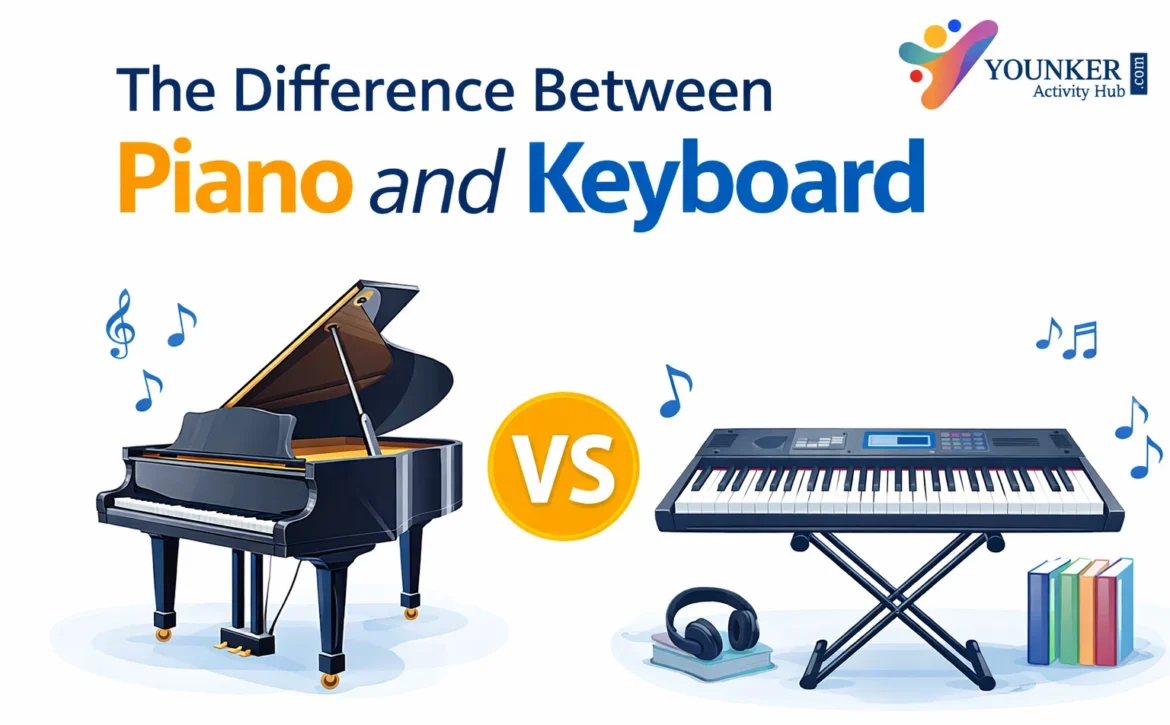
The Difference Between Piano and Keyboard

Learning to play a musical instrument – like a piano or keyboard – is great at any age. Studies have shown that learning to play the piano/keyboard can improve memory. Other benefits of piano or keyboard lessons include improved brain speed, sharpened concentration, and less stress.

Many people are unaware of the differences between a keyboard and a piano. A piano is a keyboard musical instrument in which the sound comes from felt-covered hammers striking wire strings in the body. A keyboard may have the same number of keys but is an electronic instrument that is smaller and easier to transport. The sound is amplified through internal or external speakers and/or amplifiers.

There are several differences between the two instruments, which means instruction is approached differently. But what exactly is the difference between a keyboard and a piano? Let’s read on to learn more about these two fantastic instruments.

Deciding Between a Keyboard and a Piano

While both instruments share similarities, there are some notable differences. These include:

Key Arrangement

The key arrangement on both a piano and keyboard is identical. The difference here comes down to the width of the keys. Piano keys tend to be wider, while keyboard keys are usually thinner and closer together. However, there are exceptions – and some keyboards have keys that match the width of a piano.

While it may not sound like something that matters, the width of the keys can affect how you play the instrument due to changes in hand positioning. It’s recommended to try both and decide what’s more comfortable for you.

Action

The action is the mechanism that produces sounds – which is different between a piano and a keyboard. Being an acoustic instrument, a piano’s sound is produced when the hammer hits the strings. This creates a feeling of resistance or a weighted action.

A keyboard is electronic, and the sound derives from the processor and electronic components inside the keyboard. As a result, the action on keyboards tends to be lighter and lacks the resistance found on pianos.

Some electronic pianos have weighted keys. If the action on the keys is important to you, it’ll be something you’ll want to research.

Range

Pianos consist of 88 keys and have a wide range of sounds and octaves. Generally, pianos have a larger range than keyboards. Keyboards can come in variations that have 88 keys, but they usually have fewer keys than a piano.

As a result, pianos tend to be able to reach deeper bass notes and higher treble notes. This is important for musicians as it gives them more options for musical expression. One thing to remember when purchasing a keyboard is that at least 72 keys are required for most contemporary music or modern music.

Price

If price is a factor in your purchase, you need to know that pianos will be more expensive than keyboards, as they have a more complex construction. Ongoing maintenance will also be required to keep it in tune. Prices for pianos can start in the low thousands and climb to more than most luxury cars. The manufacturer, material, and design all play a part in the price of a piano. 

On the other hand, keyboards might be a good option for those just starting out or on a budget. Keyboards can be purchased for around $100 up to a few thousand, depending on the features you’re looking for.

One thing to keep in mind is that pianos are considered long-term investments – and may increase in value over time. It’s also possible to rent a piano if you don’t want to commit to such a large purchase.

Sound Quality

Technology in keyboards has come a long way. While some high-quality keyboards can mimic the sound of a piano, most pianos have a much richer and fuller sound. Since it’s an acoustic instrument, the sound of a piano is amplified from the instrument itself. The construction and action of the piano contribute to its superior sound quality. 

Keyboards are electronic instruments that can produce a multitude of sounds. They can sound like pianos, horns, organs, strings, and many more. Since they are electronic, keyboards need to be amplified, either from an internal/external speaker or amplifier. Unlike pianos, they also have a volume knob, so you can make them louder or quiet.  

Weight and Portability

Anyone who has ever seen a piano knows they do not travel easily. They are significantly heavier and less portable than keyboards. Pianos have more intricate parts and require more effort to move. This process usually requires professionals and a large truck. Once moved, a piano will most likely need to be re-tuned. 

On the other hand, keyboards and digital pianos can be picked up and moved anywhere they are needed. They’ll fit into most cars and don’t require a team to move. Keyboards can be plugged into amplifiers or monitors for large performances. Since they are electronic, they do not need to be tuned. 

Maintenance

Pianos require regular tuning to maintain their sound quality. This is an added expense as it needs to be done by a professional technician. Also, since it’s made of wood and metal, pianos, like guitars, can be susceptible to environmental factors like temperature, humidity, or seasonal changes. 

It’s important to perform regular maintenance on your keyboard by cleaning it regularly. Dust and dirt particles can get in between the keys or into the cavity of the keyboard and affect the sound and operation. 

Pianos vs. Keyboards: Frequently Asked Questions

Can I Learn to Play the Piano on a Keyboard?

Absolutely. You’ll need a keyboard with full-size keys and weighted action to mimic the feel and scale length of a piano. Without these, practicing may feel different due to the key width and the action – and switching between the two will be difficult. The final decision is up to the player and their preferences in terms of which instrument they prefer to practice while learning. 

Is it Easier to Play Songs on the Piano or Keyboard?

This is going to depend on the player’s personal preference, as well as their skills, scale length, and techniques required for each song. Some musicians find it easier to play certain songs on a keyboard due to the lighter action and the ability to implement different sounds. Both a piano and keyboard can be used to play a variety of songs in different genres. 

Do Pianos or Keyboards Have More Options for Sounds and Effects?

This depends on the specific piano or keyboard. Pianos have pedals that affect the sound. Also, by changing how hard you depress the keys, the player can affect the dynamics of the sound coming from the piano. Most keyboards have a large variety of sounds and effects that can include strings and piano sounds – as well as percussion, horns, and other instruments.

Is Learning to Play the Piano or Keyboard Better for My Learning and Development as a Musician?

Both keyboards and pianos are excellent tools for developing musical skills, including dexterity, ear training, and music theory. 

Studies show that learning to play the piano/keyboard strengthens hand muscles, finger speed, and hand-eye coordination. At the end of the day, it’s the player’s personal preference that will decide which instrument they are more comfortable playing. Learning to play either instrument will greatly benefit a musician’s growth and development. 

Ready to Get Started?

Learning to play the piano or keyboard is a great decision. In addition to a great hobby, you’ll gain important life skills and benefit from less stress and generally be happier. Choosing between a keyboard and a piano comes down to personal preference –  including overall cost, portability, and the songs you’ll be able to play. 

If you’re interested in learning to play either the piano or a keyboard, our experienced staff at Be Natural Music can help you choose the ideal instrument. Our experienced instructors offer lessons and classes for all skill levels so you can play the music you love. 

Contact us today to Join our online Keyboard Classes

blog
[ January 31, 2026 by admin 0 Comments ]

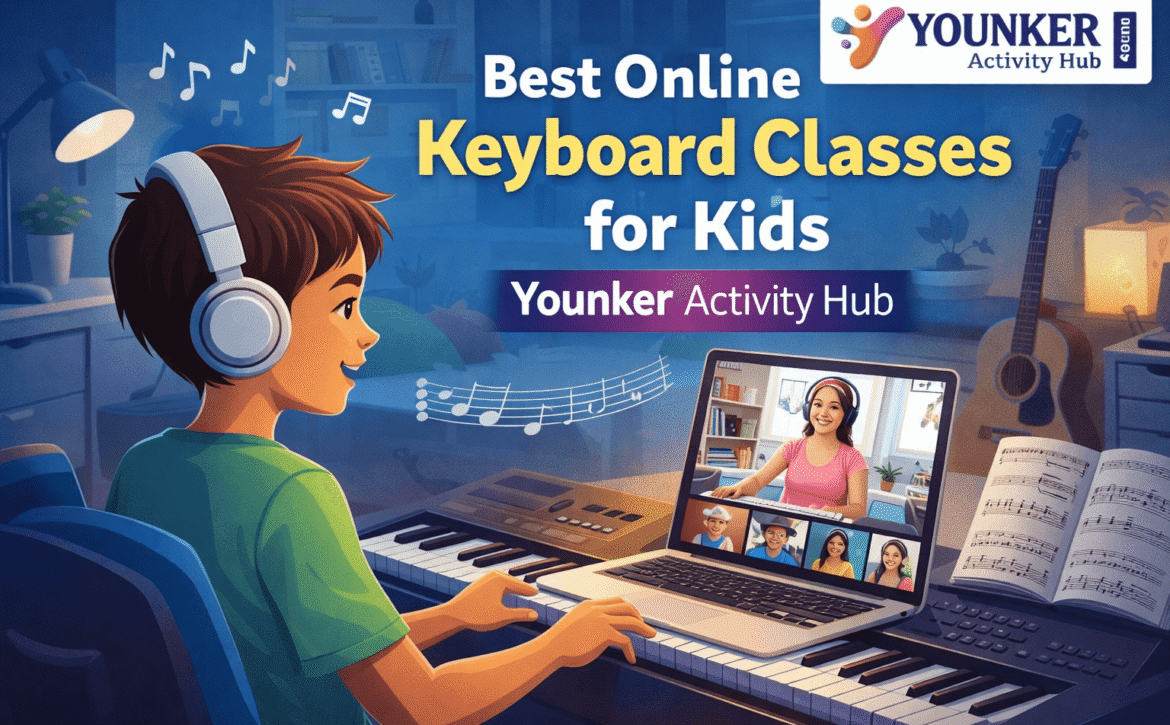
Best Online Keyboard Classes for Kids | Younker Activity Hub

Music is really important for a childs development. It helps them think and feel in ways and be creative. Now that we have learning parents want to find the best online keyboard classes. They are looking for classes that’re good, flexible and fun. At Younker Activity Hub we have keyboard classes that are designed just for kids and people who are beginners. Our classes help Music students learn Music from home and get a start, with Music.

People really like online keyboard learning these days. It is easy. It works well for families. Kids can learn keyboard learning at their own speed. They can go back to keyboard learning lessons they did before and practice online keyboard learning every day. They do not have to go to a classroom which is a big plus. This is why online keyboard learning is a choice and kids actually, like it.

Why Choose the Best Online Keyboard Classes?

When you pick the online keyboard classes you get to learn things in a proper order. This means you will play the keyboard the way and get better at it all the time. A good program teaches you the basics of music like where to put your fingers how to keep a beat and what scales and chords are. You also learn how to read music. The best part is that online keyboard classes make you feel good, about playing music and you will love playing music for a time.

At Younker Activity Hub, the people who teach our keyboard classes are really good at what they do. They are great with kids and people who are just starting out. The classes are fun. The teachers make sure everyone learns at their own pace. We want people to have a time when they are learning to play the keyboard. The keyboard classes at Younker Activity Hub are also very good, at teaching people the basics of music and how to play the keyboard well. Our keyboard classes make sure people learn things and get better at playing the keyboard all the time.

So what makes the Younker Activity Hub really special? The Younker Activity Hub has a lot of things that make it stand out from places.

The Younker Activity Hub is a place to go because it has so many things to do.

One thing that makes the Younker Activity Hub stand out is all the things you can do there.

The Younker Activity Hub is an unique place and that is what makes the Younker Activity Hub so popular.

Younker Activity Hub is a place that parents really trust because it has some of the online keyboard classes, for kids. Our Younker Activity Hub classes have lots of things including:

  • Live, instructor-led sessions for personalized guidance
  • Small batch sizes for individual attention
  • Structured curriculum from basics to advanced levels
  • Practice exercises and performance-based learning
  • Flexible class timings to suit school schedules

Our teachers use fun ways to teach, like singing songs we know and doing things together. This helps the students stay interested and want to learn. The instructors make sure the students have a time while they are learning. Our instructors make learning fun with methods and interactive activities.

Benefits of Online Keyboard Learning for Kids

Enrolling in the online keyboard classes is really good for you. The keyboard classes do a lot more than just teach you music skills. When you learn the keyboard it helps you focus better remember things and use your hands and eyes together. The keyboard classes also teach you to be more disciplined. Learning the keyboard is very good for kids because it helps them be more creative and express their feelings. This is very important for kids to develop their personality. The keyboard classes are great, for the development of children.

Online classes are really good because they let parents see how their child is doing and be a part of their learning.

Parents can check on their childs progress all the time.

Online classes have recorded sessions and parents get updates on their childs work.

This means students can practice without feeling nervous and they can get better at things faster.

Online classes help students learn classes and that is a big help, to students and their parents.

So you want to know who can join these classes. Anyone can join these classes. These classes are for people who’re interested in learning new things. These classes are really good for people who want to learn something and meet other people who like the same things as them. These classes are open to everyone who wants to join. You can join these classes if you are interested in the subject that the class is, about. These classes are a way to learn about new things and have fun at the same time. You can join these classes. Learn about the things that you like.

Our online keyboard classes are ideal for:

  • Kids aged 5 years and above
  • Beginners with no prior musical experience
  • Students looking to build a strong foundation in keyboard music
  • Hobby learners as well as those preparing for graded music exams

My child wants to play music for fun. Maybe even become a musician one day. Younker Activity Hub is a place for my child to learn music because it has the right environment for them to learn and have fun with music. Younker Activity Hub is really good for kids who want to play music for fun or, for kids who want to pursue music and become a musician.

Start Your Musical Journey Today

If you are looking for the online keyboard classes that are good at teaching and also fun Younker Activity Hub is the way to go. The online keyboard classes at Younker Activity Hub have teachers the lessons are really interesting and you can take them at a time that works for you. This makes learning the keyboard with Younker Activity Hub easy and really fun. Younker Activity Hub online keyboard classes are the choice, for people who want to learn the keyboard in a fun way.

Give your child the gift of music and confidence. Enroll today with Younker Activity Hub and watch their musical skills grow—one key at a time.

Follow Us on Instagram


blog
[ January 20, 2026 by admin 0 Comments ]

What’s the Best Age to Learn a New Language?

People often ask Am I too young or am I too old when it comes to learning a new language. The best part is that there is no wrong age to start. But different ages bring different advantages. Whether you’re a child, or teenager, or an adult, your brain is always capable of learning something new. In this guide, you can learn everything about the best age to learn a new language.

Why do people think kids learn languages faster?

You might have noticed that small kids can pick up languages easily. A child who grows up hearing two or three different languages often speaks all of them without any accent. This happens because the brain is always developing. Young kids learn by listening and copying, and do not feel shy about making mistakes. The brain is like a sponge. It absorbs words, sounds, and grammar without much effort, which is the only reason why a lot of experts say the best age to start German classes online is around 2 and 10 years. But this does not mean adults cannot learn well; it only means children learn differently.

Is the critical time real?

You might have heard about something called the critical time. This is the idea that there is a special time in childhood when learning a language is easier. There is some truth in this. During early childhood, the brain is more flexible, and it is better at hearing and producing new sounds. This is the only reason why kids usually have a better accent as compared to adults when they learn a new language. But here is the important part: the ability to learn never disappears. Adults might find pronunciation harder, but they often learn faster in other ways.

So what really matters more than age?

Age helps, but it is not the most important thing. These things matter, like practising speaking, listening, reading and writing regularly makes a big difference. Even 20 minutes a day helps. People who have a reason to learn much better, maybe you want to travel, work, or talk to someone you love. Watching shows, listening to music, or talking to people in that language builds natural understanding. Mistakes are part of learning. Kids do not fear them; adults should also try the same. You can even join Spanish classes online if you are a working professional and juggling multiple tasks.

So, What Is the “Best” Age?

Here is the honest answer:

  • Best age for accent: Early childhood
  • Best age for fast learning: Teen years and young adulthood
  • Best age for commitment: Adults

So the real best age is the age when you start and keep going.

A 7-year-old who studies for one year will not beat a 40-year-old who studies every day for three years.

How to Start at Any Age

No matter how old you are, here is a simple way to begin:

  • Listen to the language every day
  • Learn a few new words daily
  • Speak out loud, even if you are alone
  • Watch movies or videos in that language
  • Use apps, books, or online lessons

So, what is the best age to learn a new language? The best ages right now. Learning a language is not about age, it is all about curiosity, practice and enjoying the journey.

Read More

  1. Does Chess Make Kids Smarter, or Do Smart Kids Play Chess?
  2. 10 Common Mistakes Beginners make while Learning Music Online

blog
[ January 12, 2026 by admin 0 Comments ]

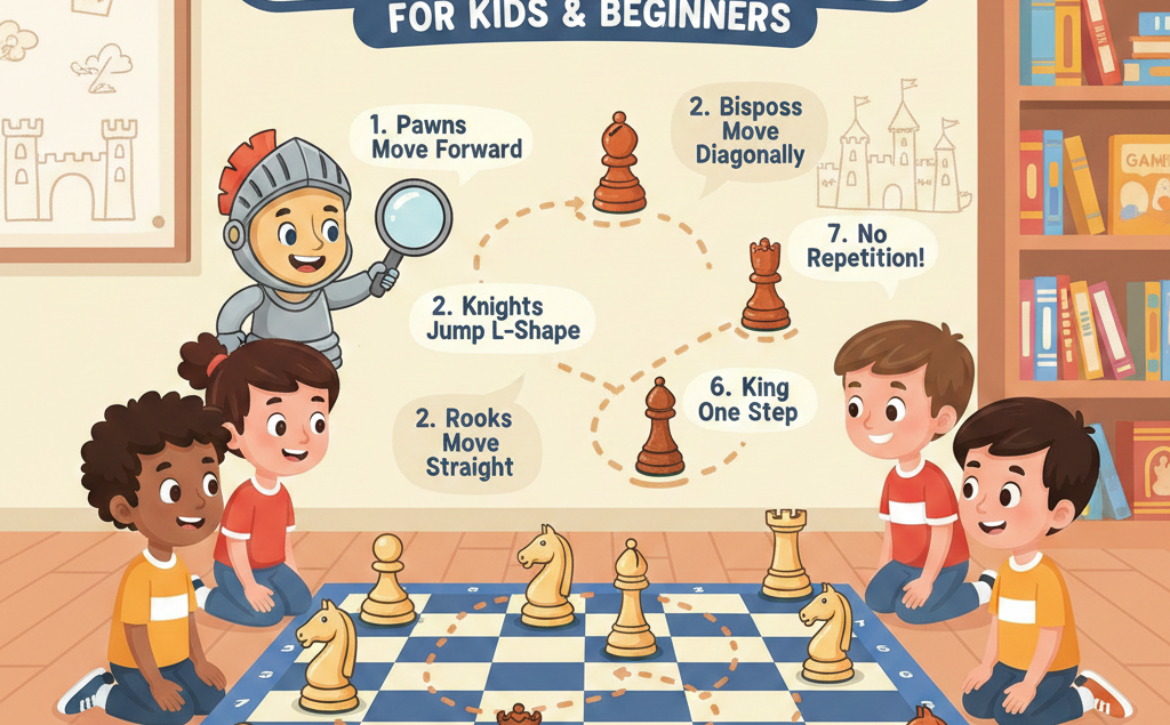
Does Chess Make Kids Smarter, or Do Smart Kids Play Chess?

Does Chess Make Kids Smarter, or Do Smart Kids Play Chess?

Chess is undoubtedly a game of smart minds. You may ask, is it that chess makes children smarter, or do intelligent children just have a liking for chess? According to research, there is an intermediate between the two. Children who are curious and are inclined towards academics find this game of chess appealing. Research has also revealed that learning and playing the game will become an active way of enhancing cognitive capabilities.

Wondering where to make your child learn the tactics of chess? Well, look no further! Younker Activity Hub is there to help you! It offers exclusive online chess classes for kids.

What Research Reveals About Chess and Intelligence

In-depth research over a long period of time in the school setup has shown that children who habitually play chess usually exhibit tangible progress in other areas, such as mathematics and reading. These benefits are enhanced further when the game of chess is instructed in a systematic manner as opposed to playing in a relaxed manner. This shows that training in chess is an aspect of mental growth and is not a mere reflection of previously acquired intelligence.

 Benefits of Chess for Kids

The positive effects of chess on children extend further than school grades. The benefits of chess for kids include enhancing their thought process. Find out the influence chess has on the general development of the mind:

●     Better problem-solving skills: Chess makes children think over and analyse situations. You get to think in a logical and critical way.

●     Enhanced decision-making and memorizing skills: Understanding patterns and strategies will enhance your concentration levels. Your memory will work better.

●     Better patience and discipline: The game helps the children learn to follow a stable pace. Children also get to think before acting.

Such capabilities tend to translate to the classroom learning and daily decision-making.

Importance of Online Chess Classes for Kids

Online chess classes for kids are the best way to learn chess. Virtual classes enable the children to study at their own pace. You can take the guidance of professional coaches. Regular feedback, interaction sessions, and practice matches allow keeping the interest. All these motivate steady improvement. Online formats are also flexible and give a structured learning environment at home to many families.

Chess as a Tool for Holistic Development

Rather than focusing on intellectual growth, chess promotes overall growth. Children learn to analyze consequences, manage their time, and handle pressure. Such habits are important life skills that do not start and end at the chessboard and lead to future academic and personal achievement.

Get in Touch with Younker Activity Hub

Finally, though intelligent children may be attracted to chess, practice can definitely sharpen the mind. Gained informally or in online chess classes for kids, the positive aspects of chess as a learning activity include improved thinking, increased concentration, and confidence, making it a potent learning tool for growing minds.  Contact the Younger Activity Hub to witness your child’s intelligence grow exponentially. It helps maximize the benefits of chess for kids.

Also Read :

  1. 10 Common Mistakes Beginners make while Learning Music Online
  2. The Role of Coding in Developing Problem-Solving Skills in Kids

blog
[ January 3, 2026 by admin 0 Comments ]

10 Common Mistakes Beginners make while Learning Music Online

Online learning has made music more accessible than ever before. Today you can learn guitar or keyboard from the comfort of your home through Online Music Classes . It sounds perfect right? And it can be if beginners avoid some common mistakes. At Younker Activity hub teachers can actually see beginners struggling not because they lack talent but because they are unknowingly developing some habits early on.

Playing an untuned Guitar or Keyboard

This is one of the biggest mistakes that you can make as a beginner. You don’t know how important tuning is or assume it doesn’t matter early on.

When a guitar is not tuned:

  • Notes sound wrong even when played correctly
  • Learners feel discouraged
  • Ear training gets affected

What to do

  • Use a guitar tuning app or digital tuner before every practice
  • Learn basic tuning as part of your first lessons
  • Make tuning a daily habit

Skipping basics and jumping to songs too quickly

You might want to play full songs right away and that’s understandable. Basics might seem boring but they built the foundation that makes songs easier later on.

But skipping:

  • Finger exercises
  • Scales
  • Hand positioning

Leads to:

  • Slow progress
  • Confusion
  • Poor technique

Poor posture while playing guitar or keyboard

Posture matters more than you might even realize. You can sit upright and relax your shoulders.

Common posture mistakes include:

  • Slouching
  • Sitting too far from the keyboard
  • Holding the guitar at an awkward angle

Over time, this can cause:

  • Hand pain
  • Wrist strain
  • Lack of control

Practicing without a clear routine

One day of long practice followed by a break of no practice doesn’t help at all. Teachers offering online music classes can guide you with structured practice plans so that you do not feel confused.

Many beginners:

  • Practice randomly
  • Don’t know what to practice
  • Feel lost during sessions

What works better

  • Short, daily practice (20–30 minutes)
  • Clear goals for each session

Ignoring Rhythm and Timing

Beginners often focus only on:

  • Chords
  • Notes
  • Finger movement

But forget rhythm, which is the heart of music.

Without good timing:

  • Music sounds messy

Learning from Too Many Random Videos

The internet is full of free tutorials, but watching too many teachers can confuse beginners.

Common problems:

  • Different techniques taught at once
  • No clear learning path
  • Information overload

Instead you can choose a guided online music class instead of jumping between random videos.

Not Paying Attention to Finger Placement

On guitar and keyboard, finger placement is everything.

Beginners often:

  • Use incorrect fingers
  • Press too hard or too softly
  • Ignore finger numbering

This slows speed and accuracy later.

Solution

  • Follow finger charts
  • Practice slowly

Getting Discouraged Too Quickly

Music takes time. Many beginners quit because:

  • Progress feels slow
  • Fingers hurt initially
  • Songs don’t sound perfect

Every musician struggles at the beginning. It is very important for you to be patient. Supportive online music classes can help you stay motivated and confident.

Not Asking Questions During Online Classes

Some beginners feel shy or think their questions are “too basic.”

As a result:

  • Doubts remain unclear
  • Mistakes repeat
  • Learning slows down

There are no silly questions in music learning.

Practicing Without Listening to Music

Music learning isn’t only about playing, it’s also about listening.

Beginners often forget to:

  • Listen to good music
  • Observe rhythm and melody
  • Develop musical understanding

So learning music online can be a beautiful journey if done correctly. Avoiding these mistakes can save time and build confidence.

Also Read:

  1. The Role of Coding in Developing Problem-Solving Skills in Kids
  2. How Online Hobby Classes for Kids Help in Skill Development?

blog
[ December 18, 2025 by admin 0 Comments ]

The Role of Coding in Developing Problem-Solving Skills in Kids

Today kids are growing up in a world full of technology. From smartphones and tablets to smart TVs and games digital thinking is already a part of daily life. In this environment coding is not just about learning computers, it’s all about teaching your kids how to think, how to break problems down and also how to find smart solutions. That’s why choosing Online coding classes for kids is so important.

What Do We Really Mean by Problem-Solving Skills?

Problem-solving is not just about answering a math question or fixing an error.

For kids, problem-solving means:

  • Understanding a problem clearly
  • Thinking step by step
  • Trying different solutions
  • Learning from mistakes
  • Not giving up easily

How coding teaches your kids to think step by step

When your kids join coding classes for kids, they can clearly realise that computers don’t guess they just follow clear instructions.

To make something work, a child has to:

  1. Understand what they want the program to do
  2. Break that task into small steps
  3. Arrange those steps in the right order

This process is called logical thinking, and it is the heart of problem-solving.

For example, if a child is coding a game character to move:

  • What should happen first?
  • What happens if the button is clicked?
  • What if the character hits a wall?

Coding encourages try again thinking

One of the biggest lessons coding teaches your kids is if it doesn’t work, try again. The process helps your kids understand that mistakes are normal and not something to fear. In coding classes your kids can learn that errors are not failures, they are clues.

When a program doesn’t run correctly, kids:

  • Check where they went wrong
  • Fix small errors
  • Test the solution again

Coding Builds Strong Analytical Skills

Coding pushes kids to ask questions like:

  • Why is this not working?
  • What happens if I change this line?
  • How can I make this faster or better?

Instead of guessing answers, kids learn to:

  • Observe carefully
  • Analyze cause and effect
  • Make informed decisions

These skills are useful in:

  • Math and science
  • Reading comprehension
  • Competitive exams
  • Everyday decision-making

Online coding classes make learning comfortable and fun

Your kids feel pressure in traditional classrooms. Online coding classes remove that stress.

Benefits of online learning include:

  • Learning from home in a comfortable environment
  • Interactive lessons with visuals and games
  • Flexible timing
  • One-on-one or small group attention

 Platforms like Younker Activity Hub focus on keeping coding fun and age appropriate. Your kids don’t feel like they’re starting, they feel like they’re creating something exciting. And learning feels fun. Your kids naturally engage more deeply and think harder.

Coding Boosts Creativity Along with Logic

Many people think coding is only about logic, but that’s not true.

Coding also encourages creativity:

  • Designing games
  • Creating animations
  • Building simple apps
  • Telling stories through code

So in short, you can say that coding is much more than just writing a code on screen for kids. It’s a powerful way to learn how to think clearly, solve problems and confidently handle challenges without fear.

Also Read :

  1. How Online Hobby Classes for Kids Help in Skill Development?
  2. Fix Common Mistakes in Your Online Keyboard Classes
  3. Sports Psychology and Guidance: The Mind Behind the Game
  4. Online Chess Classes in England | Learn from Experts

blog
[ December 4, 2025 by admin 0 Comments ]

How Online Hobby Classes for Kids Help in Skill Development?

Kids today are completely curious, energetic and eager to learn new things. As parents you always want to give the best opportunities to grow not just academically but also creatively. With the rise of digital learning, online hobby classes for kids have gained a lot of prominence among parents who want their kids to discover new interests and develop important life skills. There are different platforms that make this even easier by offering a huge variety of fun interactive and engaging hobby classes right from home.

They encourage creativity and imagination

Kids are naturally creative. Whether they are drawing, dancing , singing or building something their imagination is limitless.  Online hobby classes give children the freedom to explore different creative fields such as:

  • Art and craft
  • Drawing and painting
  • Music and singing
  • Dance
  • Storytelling
  • Creative writing

At Younker activity hub your little ones get step by step guidance from experienced trainers which helps them shape their creative ideas into something real and meaningful. Creativity is not just fun but also improves confidence and problem solving skills.

They teach discipline and time management

Online classes run on a fixed schedule which helps your kids learn the importance of discipline and routine. The habits are very valuable as kids grow. With structured classes your kids learn responsibility in a fun and a stress free way.

They learn:

  • To show up on time
  • To prepare their materials beforehand
  • To practice regularly
  • To complete small assignments or activities

They improve social skills

You might just think children cannot socialize online but this is not true. In fact online hobby classes connect kids with peers who share similar interests. These interactions help build teamwork, listening skills and empathy.

Whether it’s a drawing class, dance workshop, music group, or robotics session, kids:

  • Interact with others
  • Share ideas
  • Perform or present their work
  • Give and receive feedback
  • Work in small groups during activities

They help kids discover their real passions

Not every child knows what they love right away and that’s OK. Online hobby classes are the perfect way to let kids explore different interests without any pressure to stop . Maybe your child has a different talent waiting to be discovered. As kids explore different hobbies they slowly begin to identify what they enjoy the most. The early discovery of passion can help shape the future personality and career choices.

Online hobby platforms like Younker Activity Hub offer a wide range of hobbies, so children can try:

  • Robotics
  • Coding
  • Art
  • Music
  • Dance
  • Chess
  • Yoga
  • Language learning
  • Craft activities

This strengthens academic skills

Hobby classes don’t just help with creativity, many of them support academic development as well, so even though hobby classes are fun, they play a big role in making your kids smarter and more confident learners .

For example

  • Chess improves logic, planning, and problem-solving.
  • Music boosts memory, listening skills, and math patterns.
  • Art helps with visual learning and brain development.
  • Storytelling improves vocabulary and speaking skills.
  • Coding builds analytical and technical thinking.

Online hobby classes for kids are more than just fun; they are powerful tools for skill development. From creativity and confidence to discipline and academic growth hobby classes shape kids in a way that go far beyond the classroom.

Read More :

  1. Fix Common Mistakes in Your Online Keyboard Classes
  2. Online Chess Classes in Texas, USA | Book Trial Chess Class

ENQUIRE NOW


    captcha
    Reload

    Please enter the characters shown in the CAPTCHA to verify that you are human.

    This will close in 0 seconds