
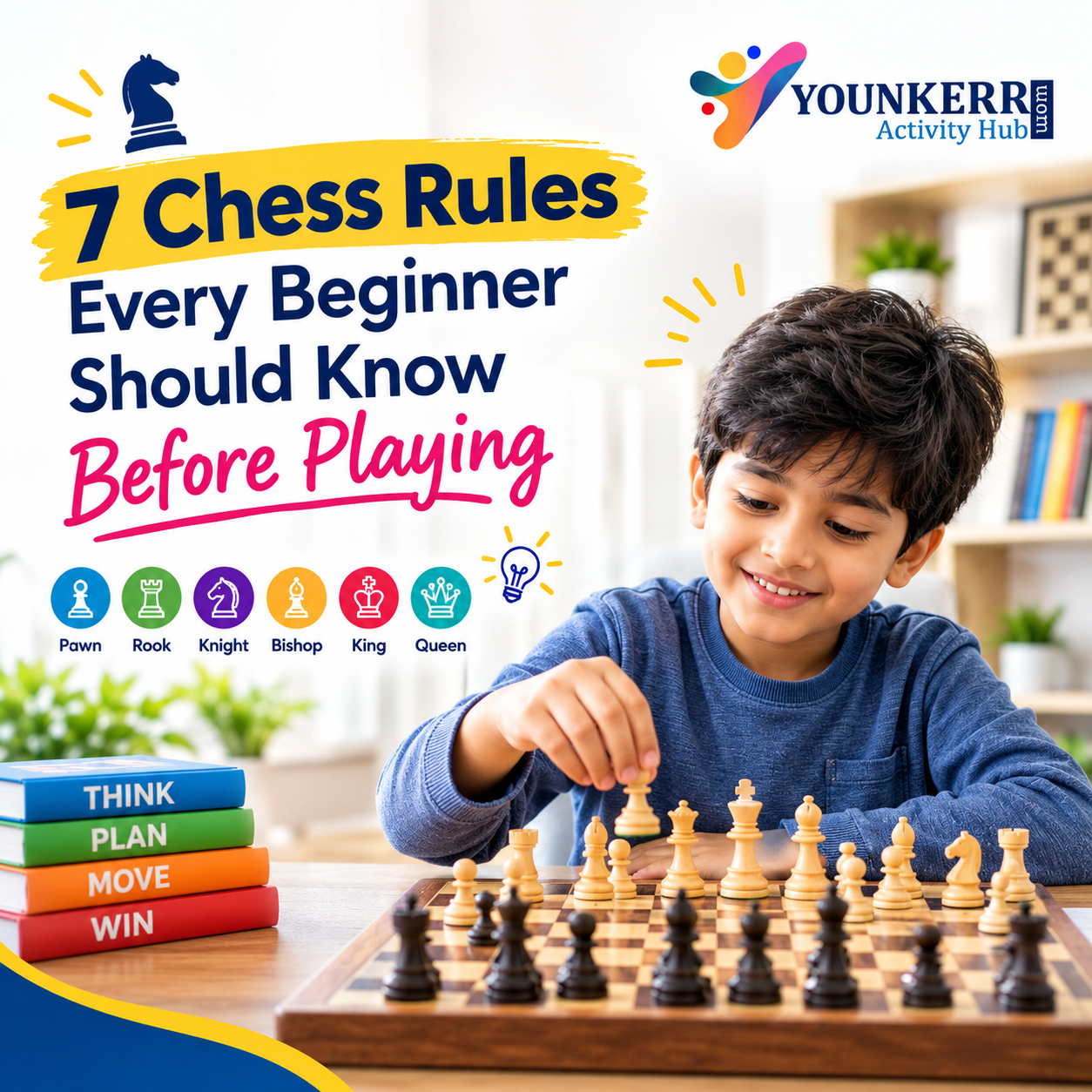
Learning chess for the first time can be very exciting, but it is normal to feel confused about the rules: which pieces can move diagonally? How do you protect your king? The good news is that you don’t need to learn complicated strategies before playing your first game. Start with the basics, practice your moves, and build your confidence gradually. If you want structured guidance, beginner-friendly online chess classes can also help you understand the game through practical examples.
Learn how each chess piece moves.
Every chess piece has its own movement rules. Understanding them is the first step towards playing confidently. For example, if other pieces surround your knight, it can still jump over them. Practicing these movements individually makes the game easier to understand. For kids, simple exercises and guided practice in chess classes can make learning each piece more engaging.
- King: Moves one square in any direction.
- Queen: Moves any number of squares horizontally, vertically, or diagonally.
- Rook: Moves any number of squares horizontally or vertically.
- Bishop: Moves diagonally across the board.
- Knight: Moves in an L-shape and can jump over other pieces.
- Pawn: Usually moves one square forward. On its first move, it can advance two squares if the path is clear. It captures diagonally.
Understand check and checkmate.
Check and checkmate are 2 important terms every beginner should know. A check happens when your king is under attack. You must respond by moving your king, capturing the attacking piece, or blocking the attack, provided the move is legal. Checkmate happens when your king is under attack, and there is no legal move to escape. The game ends, and the player delivering the checkmate wins.
Remember that white moves first.
In standard chess, the player using the white pieces makes the first move. After that, both players take turns moving one piece at a time. You cannot skip a turn or make 2 moves consecutively. Every move must follow the movement rules of the selected piece. Although white moves first, this does not guarantee a win. As a beginner, you need to focus on developing your pieces and controlling important squares.
Know when you can capture an opponent’s piece
Capturing allows you to remove your opponent’s piece from the board. Most pieces are captured by moving onto a square occupied by an opponent’s piece, following the normal movement rules. Pawns work differently. They move forward but capture diagonally, so they cannot capture an opponent’s piece directly in front of them. But capturing every eligible piece is not always the best decision. You might even take an opponent’s rook but lose your queen on the next move.
Always protect your king.
Your king is the most important piece on the board. The goal of chess is to checkmate your opponent’s king, not to capture it directly. You must never make a move that leaves your own king in check. If your opponent attacks your king, you must make a legal move to remove the threat. As a beginner, you often focus on attacking and capturing pieces because these moves feel rewarding. But defense is equally important. Keeping your king safe and protecting valuable pieces can help you avoid mistakes.
Get familiar with special chess moves.
Chess has 3 special moves that are worth learning once you understand the basics. A special move involving the king and rook can help protect the king. It is especially forecasting. En passant is a special pawn capture available immediately after an opponent makes a qualifying 2-square pawn move. Pawn promotion is when a pawn reaches the opposite end of the board; it must be promoted to a queen or Bishop.
Understand how a chess game can be
Not every chess game ends with a winner. Sometimes the result is stalemate. This happens when a player has no legal move available, but their king is not in check. Other situations, including an agreed draw and the 50-move rule, can also cause a draw under the applicable rules.
Learning chess is a gradual process. Once you understand how the pieces move, how checkmate works, and when to defend your king, you can start and join the game without feeling overwhelmed. If you are learning with a coach, choose lessons that match your current skill level and give you enough time to practice. Parents exploring online chess classes in Pune can look for live sessions with experienced instructors and opportunities for kids to play practice games. When comparing the best online chess classes in India, focus on teaching quality and how well the lessons suit a beginner’s needs.
Read Also – 7 Move Rules in Chess Explained for Kids and Beginners