
younkerr Archives - Best Online Hobby Classes | Hobby Classes Near Me | Younkeractivityhub
blog
[ August 11, 2026 by admin 0 Comments ]

How Does Phonics Help Children Learn to Read Faster?

You know that moment when a kid is staring at a word, mouthing it out letter by letter, and then suddenly just… gets it? “Cuh-aa-t. Cat!” There’s this little flash of triumph on their face. That’s phonics doing exactly what it’s supposed to do.

A lot of parents figure reading comes down to memorization — show a child a word enough times and eventually it sticks. And sure, that works, up to a point. But it stops working the moment a kid meets a word they’ve never laid eyes on before. That’s the gap phonics fills. Instead of a stack of memorized flashcards, a child gets a system they can actually use.

Reading isn’t one single skill anyway. It’s really a handful of smaller ones, layered on top of each other:

  • Spotting the letters on the page
  • Matching them to the right sounds
  • Blending those sounds smoothly
  • Understanding what the word actually means

Phonics covers the first three. Skip it, and a kid is left guessing — from pictures, from context, from vague half-memory — and that guessing gets messier every year as the words get longer and less predictable. Nowadays, online phonics classes have proved to help kids learn better without having to step out.

Why Phonics-Trained Kids Read Faster

Here’s the part that actually matters day to day: a child who’s learned phonics doesn’t need every single word taught to them one at a time. They can sound out something brand new right there on the page. That’s a real head start over kids who are leaning purely on sight words they’ve memorized.

A few things in online phonics classes stack up in their favor:

  • English has tens of thousands of words — no flashcard deck is covering all of that
  • There are only about 44 sounds in the language, and once a kid learns those, they hold a kind of master key to most of what’s left
  • They stop needing someone to rescue them mid-sentence when a tricky word shows up
  • That independence tends to be the real difference between a kid who’s “still learning to read” and one who’s already reading

It Fixes Spelling Too, Almost as a Side Effect

Once a kid understands how sounds map onto letters, they start using that logic in reverse when they’re writing.

  • A child who knows “sh” makes a particular sound isn’t going to spell “ship” as “sip”
  • That kind of sound-based logic saves a lot of frustration once spelling tests start showing up in elementary school
  • It also means less reliance on rote-memorised word lists that fall apart the moment a new word appears

Why It Takes Actual Practice

Spoken language, kids just absorb — being around it is basically enough. Phonics doesn’t work that way. It needs repetition, structure, someone walking a child through it consistently.

What tends to make the biggest difference if your kid goes for online phonics classes:

  • Sessions that stay short enough to hold a young kid’s attention
  • A schedule that actually fits around a busy family week
  • An instructor who slows down or speeds up depending on how the child is doing, not a fixed pace for everyone
  • Patience — some kids move through the stages in a couple of months, others need longer, and neither is a red flag

Why the Payoff Sticks Around

A kid reading fluently by second or third grade isn’t just doing better in English. That skill shows up everywhere — science textbooks, math word problems, social studies chapters. Reading stops being a chore they’re dragging themselves through and turns into something they just use, without thinking about it much.

There’s a quieter side to this, too. Kids who struggle to sound words out tend to start avoiding reading altogether, and that avoidance compounds — the less they read, the further behind they fall, the more they avoid it. Early, solid phonics instruction is usually what stops that cycle before it really starts.

If you’re looking for guided support, Younkerr Phonics Classes runs structured online phonics classes built to help kids build real reading and spelling skills at a pace that actually fits them — steady, sound-by-sound progress that turns a hesitant reader into a confident one.

Also Read : Top International Exams Every Student Should Know About

blog
[ June 9, 2026 by admin 0 Comments ]

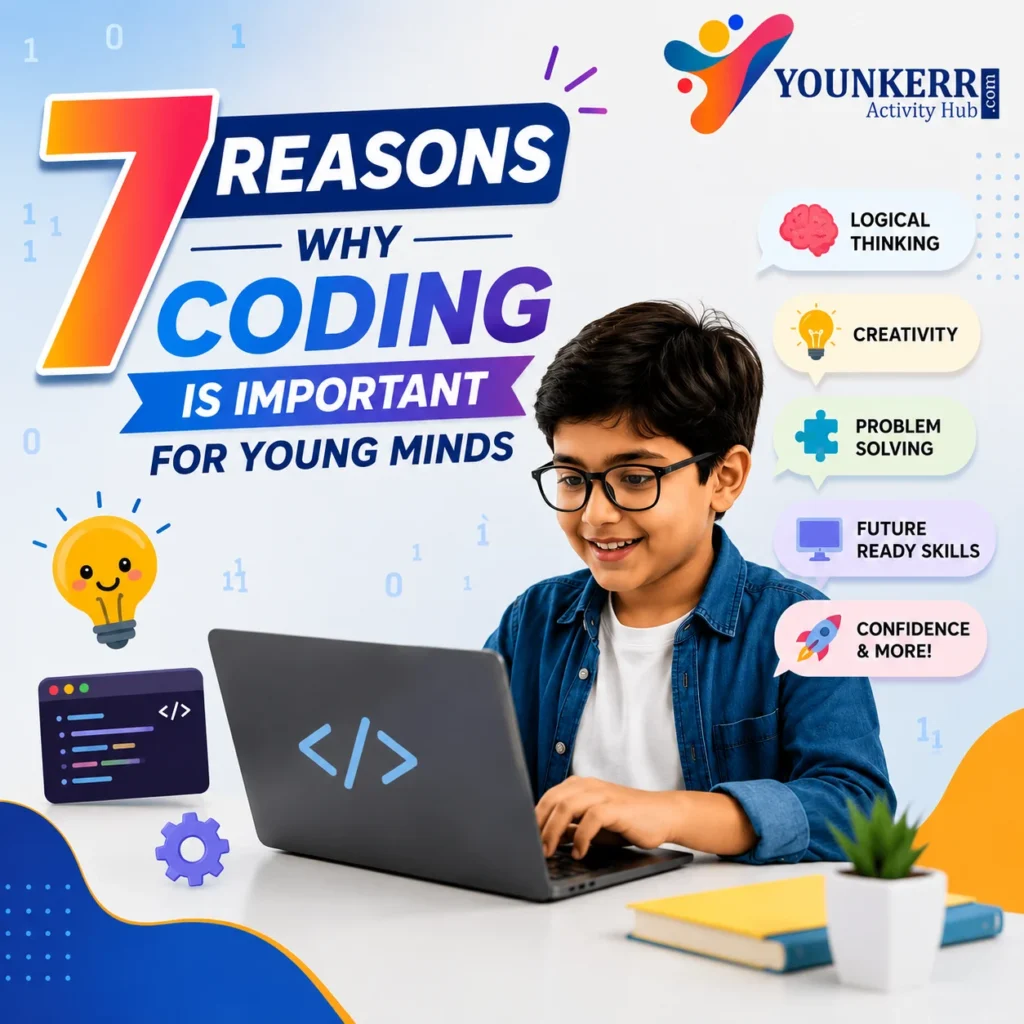
7 Reasons why Coding is Important for Young Minds

Technology is a part of everyday life. From smartphones and tablets to video games and smart devices, your kids are growing up in a digital world. No doubt many kids know how to use technology, but learning how technology works is a different skill entirely. This is exactly where coding comes in the picture. Coding is no longer just for software engineers and technology professionals. Today it is considered one of the most valuable skills that your kids can learn. Coding teaches your kids how to think and solve problems. More importantly, it helps prepare them for a future where technology will play a very important role in education.

What is Coding?

Coding is a process of giving instructions to computers so it can perform specific tasks. These instructions are written using programming languages that computers can understand. For kids coding often begins through interactive games and visual interactive programs.

Why is coding important for young minds?

Coding is much more than just computers. It teaches valuable life skills that can benefit your kids both inside and outside the classroom.

Coding develops problem-solving skills

One of the best benefits of learning to code is the development of problem-solving skills. Every coding project represents some challenges that encourage your kids to think and find solutions independently.

When children write code, they learn how to:

  • Break down complex tasks
  • Analyze situations
  • Identify solutions
  • Test ideas
  • Fix mistakes

Coding encourages creativity

You might think that coding is just about numbers and technical skills but it is highly creative. Instead of simply using technology your kids can become creators who bring their ideas to life.

Coding allows children to create:

  • Games
  • Websites
  • Animations
  • Mobile apps
  • Interactive stories
  • Digital artwork

Instead of simply using technology, kids become creators who bring their ideas to life.

Coding improves logical thinking

Coding requires your kids to think logically and follow a sequence steps. They learn to organize information and also follow processes. As your kids practice coding they develop structured thinking habits that can support learning in subjects like mathematics.

Coding teaches persistence and resilience

Every programmer encounters challenges and errors. Your kids quickly learn that mistakes are a normal part of the coding process. When the code doesn’t work as expected they must identify the problem and also make adjustments. This process teaches perseverance and resilience.

Coding prepares child for future career

Technologies transforming nearly every industry. Many future careers will require at least a basic understanding of digital tools and technology. Learning coding at a very young age can provide a strong foundation for your Kids future

Industries that increasingly value coding skills include:

  • Software development
  • Artificial intelligence
  • Robotics
  • Healthcare
  • Engineering
  • Finance
  • Digital marketing
  • Game development

Coding strengthens academic performance

Coding supports learning in several academic subjects. Coding helps your kids understand patterns and logic in mathematics. It also introduces them to scientific thinking and experimentation.

Coding builds confidence and independence

There is a special sense of accomplishment that comes from creating something from scratch. When your kids successfully build a game animation or project, they see the results of their hard work immediately. This experience helps them believe in their abilities also develop independence

Skills Children Learn Through Coding

Beyond technical knowledge, coding helps children develop a wide range of transferable skills.

These include:

  • Critical thinking
  • Creativity
  • Communication
  • Collaboration
  • Problem-solving
  • Logical reasoning
  • Patience
  • Adaptability
  • Innovation

These skills are valuable in school, future careers, and everyday life.

So you must know that coding is way more than just a technical skill; it’s a powerful tool for developing creativity and critical thinking. By learning to code, your kids can gain valuable skills that can benefit them academically and personally. If you are looking to help your kids explore the exciting world of technology, Younker coding classes provide engaging programs that make coding fun and interactive.

Book a Free Coding Demo Class

×