chess classes Archives - Best Online Hobby Classes | Hobby Classes Near Me | Younkeractivityhub
blog
[ February 23, 2026 by admin 0 Comments ]

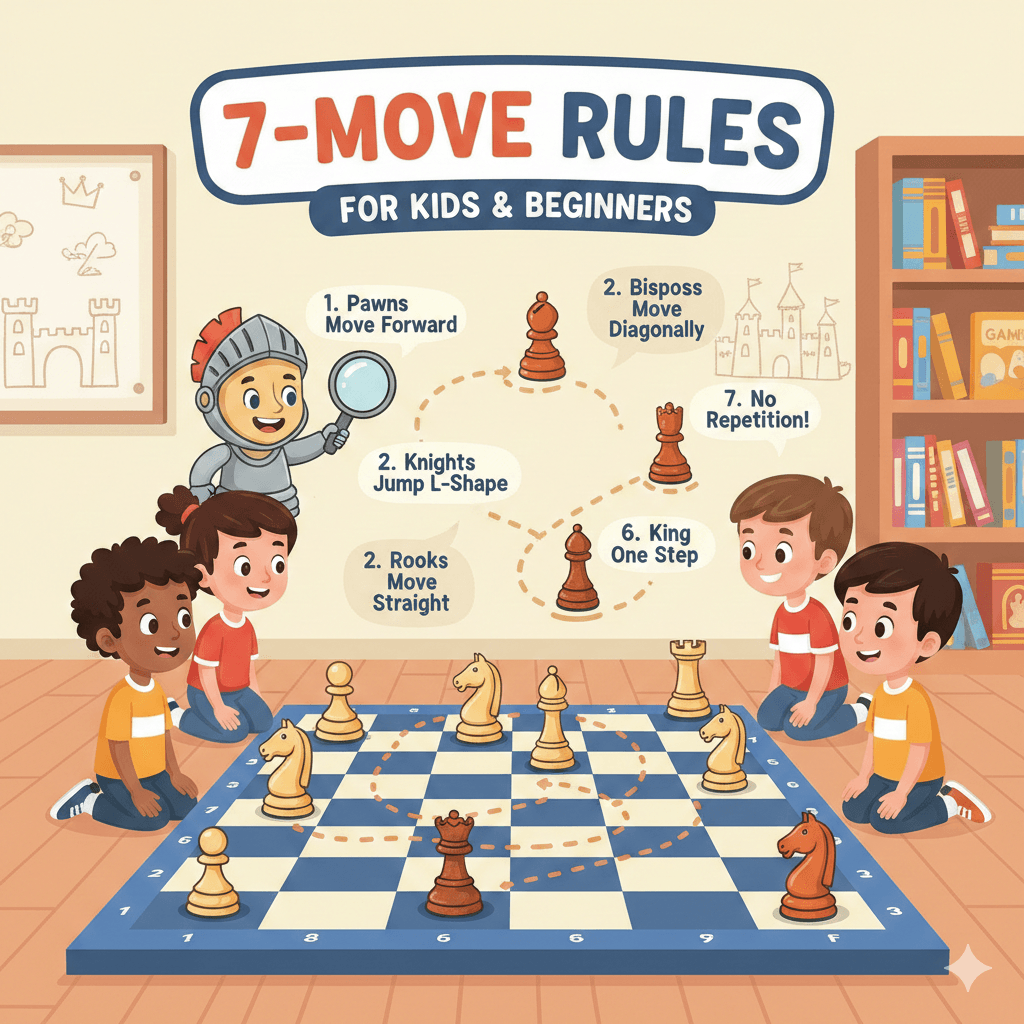
7-Move Rules in Chess Explained for Kids and Beginners

Chess is a completely fun and smart game. It makes you think and also stay patient. If you are new to chess, you might have heard someone say there’s a 7-move rule. But what does that actually mean? Was there a rule called seven moves in chess? Well in this guide you can learn everything about the 7 Move Rules.

Are there any official 7 Move Rules?

First, let’s clear one thing: in official chess rules there is no official rule called the seven move rule. So if someone tells you that the game automatically ends after 7 moves, that is not true. But don’t worry, the idea of seven moves usually comes from beginner lessons and quick checkmate tricks.

What do people mean by 7 Move Rules?

You might try to win very quickly sometimes in 4-5 or seven moves. These are called quick checkmates. The famous fast checkmate is fool’s mate and scholar’s mate. Even famous players like Magnus Carlsen learned the tricks when they were beginners. But here you need to know that there are no official rules and they are just fast winning strategies.

The idea of move limits in friendly games

Sometimes you might create your own rules as a beginner. For example if no one wins in seven moves start. These are not official chess rules, they are just practice rules to make your game faster and more exciting for beginners. In real tournament games the games can last for 20 moves or even 40 moves. There is no limit of seven moves.

Real important chess rules that you should know

As there are no real 7 Move Rules you need to understand the actual important rules. An official chess game if no pawn moves and no pieces captured for 50 moves the game can be declared or drawn. The rule exists to prevent very long games when nothing happens. This is very different from 7 moves. The 3 fold repetition rule is where a player can claim a draw. Again nothing related to seven moves. In professional tournaments if 75 moves pass without a pawn movement or a capture the game is automatically drawn. This rule is not a part of any regulation.

Why do beginners think 7 moves are very important?

The first few moves in chess are called the opening. When you start learning chess, teachers often say control the center in the first five to seven moves. During the opening you should develop your pieces, control the center and also protect your being. Because the first five to seven moves are very important. You might think that there is a 7 move rule but it’s just guidance not a rule.

So you must know that there is no official 7 move rule in chess; it’s usually a beginner’s misunderstanding or a quick checkmate idea. Chess is deep and a beautiful game. It does not end in seven moves unless someone makes a big mistake. Instead of focusing on fast wins it’s very important for you to focus on good openings, strong middle game ideas and smart end game tricks and most importantly you need to have fun. 

Few Seats Left: Click Here

Finally, though intelligent children may be attracted to chess, practice can definitely sharpen the mind. Gained informally or in online chess classes for kids, the positive aspects of chess as a learning activity include improved thinking, increased concentration, and confidence, making it a potent learning tool for growing minds.  Contact the Younger Activity Hub to witness your child’s intelligence grow exponentially. It helps maximize the benefits of chess for kids.

blogchess
[ July 3, 2023 by admin 0 Comments ]

How Chess Helps Your Little Ones Become Brilliant Thinkers

Throughout history, intellectuals and thinkers have admired chess, an age-old strategic board game. No wonder parents today encourage their children to learn and play chess to improve cognitive abilities. They also aspire to enhance critical thinking. This blog post will explore how engaging in chess can assist your children in becoming astute thinkers. Think about enrolling them in the best chess classes online.


1. Enhances problem-solving skills

Playing chess can greatly contribute to enhancing the problem-solving skills of your child. Complex challenges in chess call for skills like strategic planning, pattern recognition, and concentration from players. Your child can develop a strong logical and analytical thinking foundation through learning to analyze different scenarios and make calculated moves.

2. Improves memory and concentration

Playing chess necessitates significant focus and attention to particulars. Players must remember the particular rules that control the movement of each piece and anticipate potential counter-moves from their opponent. This continuous mental practice assists in enhancing your child’s memory and boosting their capacity to focus on intricate tasks.

3. Encourages creativity and strategic thinking

In contrast to many luck-based games, chess requires strategy and tactics. Players must think creatively and constantly adapt their plans to outmaneuver their opponents. This cultivates a mindset of trial and error and inventiveness, which empowers your child to formulate unique strategies and find solutions for challenges in various aspects, including chess.

4. Promotes patience and perseverance

Chess requires patience and perseverance. To make each move, one must carefully consider, as games may last for hours. By engaging in chess, your child will take the time to make thoughtful decisions and appreciate the value of persistence in overcoming obstacles.

5. Boosts self-confidence and decision-making skills

As your child improves in chess, they will grow more confident in their abilities and decision-making skills. Their life, particularly academics and social interactions, will be positively affected by this boost in self-esteem. Furthermore, grasping the significance of facing the results of their choices in the game will support them in fostering responsibility and independent thinking.

6. Develops social skills and sportsmanship

By playing chess, your child can engage socially with others and develop essential qualities of sportsmanship. Their opponents will be respected by them as they learn, gracefully celebrating victories and accepting defeat with dignity. In life, these abilities to interact socially will be useful to them and encourage healthy connections with others.


Conclusion

Chess is a remarkable tool for fostering talented thinkers. By looking for chess or hobby classes near me, you offer them an engaging activity that boosts their cognitive skills, enhances memory, and encourages creativity. It also provides valuable life lessons.

Chess playing equips children with vital thinking skills and aids in their overall development as well-rounded individuals. Hence, take your time – familiarize your little ones with the enthralling sphere of chess and behold their transformation into adept thinkers.

×